Social Security 2026: COLA Adjustments & Your 3.5% Benefit Boost

Social Security 2026: How New COLA Adjustments Could Boost Your Monthly Benefits by 3.5%
As we navigate the ever-evolving landscape of economic shifts and inflationary pressures, the future of Social Security benefits remains a paramount concern for millions of Americans. Specifically, the impending year of 2026 brings with it significant anticipation regarding the Cost-of-Living Adjustment (COLA). Projections suggest a potential 3.5% increase, a figure that could translate into a substantial boost for beneficiaries. Understanding the mechanics behind COLA, its historical context, and its projected impact in 2026 is crucial for anyone relying on or planning for Social Security as a cornerstone of their financial security.
The Social Security Administration (SSA) makes annual adjustments to benefits to ensure that the purchasing power of retirees, survivors, and disabled individuals is not eroded by inflation. This adjustment, known as the Cost-of-Living Adjustment (COLA), is a vital component of the Social Security system, designed to help beneficiaries maintain a stable standard of living. For 2026, early forecasts are pointing towards a notable 3.5% increase, a figure that, if realized, would provide a welcome financial uplift for millions. This comprehensive guide will delve into the intricacies of Social Security 2026, exploring the factors that influence COLA, the potential impact of a 3.5% increase on your monthly benefits, and strategies to maximize your financial well-being in light of these changes.
The significance of COLA cannot be overstated. Without these annual adjustments, the fixed income of Social Security beneficiaries would steadily lose value over time due to inflation. Imagine trying to pay for groceries, utilities, and healthcare with the same amount of money you received a decade ago, while the cost of everything around you has dramatically increased. This is precisely the scenario COLA aims to prevent. By tying benefit increases to inflation, Social Security strives to provide a safety net that adapts to economic realities, offering a measure of financial stability to those who rely on it most. The projected 3.5% increase for Social Security 2026 is thus not merely a number; it represents a tangible improvement in the financial outlook for millions of individuals and families across the nation, allowing them to better cope with rising living expenses and maintain their quality of life.
Understanding the Mechanics of COLA: How Your Benefits Are Adjusted
To truly grasp the implications of the projected 3.5% COLA for Social Security 2026, it’s essential to understand how these adjustments are calculated. The COLA is determined by the increase in the Consumer Price Index for Urban Wage Earners and Clerical Workers (CPI-W). Specifically, the SSA compares the average CPI-W for the third quarter of the current year (July, August, and September) with the average CPI-W for the third quarter of the previous year. If there is an increase, the percentage difference becomes the COLA for the following year. This method ensures that the COLA directly reflects changes in the cost of goods and services that are relevant to a significant portion of the population.
The CPI-W is a specific measure of inflation that tracks the prices of a basket of consumer goods and services, including food, housing, transportation, medical care, and other necessities. Because it focuses on urban wage earners and clerical workers, it provides a representative snapshot of the cost of living for many Social Security beneficiaries. While there are ongoing debates about whether the CPI-W accurately reflects the spending patterns of retirees, particularly regarding healthcare costs, it remains the statutory index for COLA calculations. Therefore, fluctuations in the CPI-W directly dictate the COLA percentage. For instance, if the CPI-W shows a significant increase due to rising energy prices or food costs, it is likely that a higher COLA will be announced. Conversely, periods of low inflation typically result in smaller COLA adjustments, or in rare cases, no adjustment at all.
It’s important to note that the COLA is not a guaranteed increase. If there is no increase in the CPI-W from one year to the next, there will be no COLA. However, this has been a rare occurrence in recent history, as inflation is an almost constant factor in modern economies. The projection of a 3.5% COLA for Social Security 2026 suggests that economists anticipate continued inflationary pressures leading up to that period. This forecast is based on various economic indicators, including current inflation trends, energy prices, and wage growth. While these are projections and subject to change, they provide a valuable insight into what beneficiaries might expect. Understanding this calculation process empowers beneficiaries to anticipate and plan for changes in their monthly income, making informed financial decisions.
Historical Context: COLA Trends and Economic Influences
Examining historical COLA trends provides valuable context for the projected Social Security 2026 increase. Over the decades, COLA percentages have varied significantly, reflecting the economic climate of the time. For example, during periods of high inflation, such as the late 1970s and early 1980s, COLA adjustments were in the double digits, providing substantial boosts to benefits. Conversely, periods of low inflation, such as the early 2010s, saw very modest or even zero COLA increases. These historical fluctuations underscore the direct link between macroeconomic conditions and the financial well-being of Social Security beneficiaries.
Recent years have seen a notable uptick in COLA percentages, particularly in 2022 and 2023, which saw some of the largest adjustments in decades. These substantial increases were a direct response to the surge in inflation experienced during and after the COVID-19 pandemic, driven by supply chain disruptions, increased consumer demand, and rising energy costs. These recent experiences highlight the responsiveness of the COLA mechanism to significant economic shifts. The projected 3.5% increase for Social Security 2026, while lower than the peak adjustments of recent years, still represents a significant and positive adjustment, indicating a continued need to offset inflationary pressures.
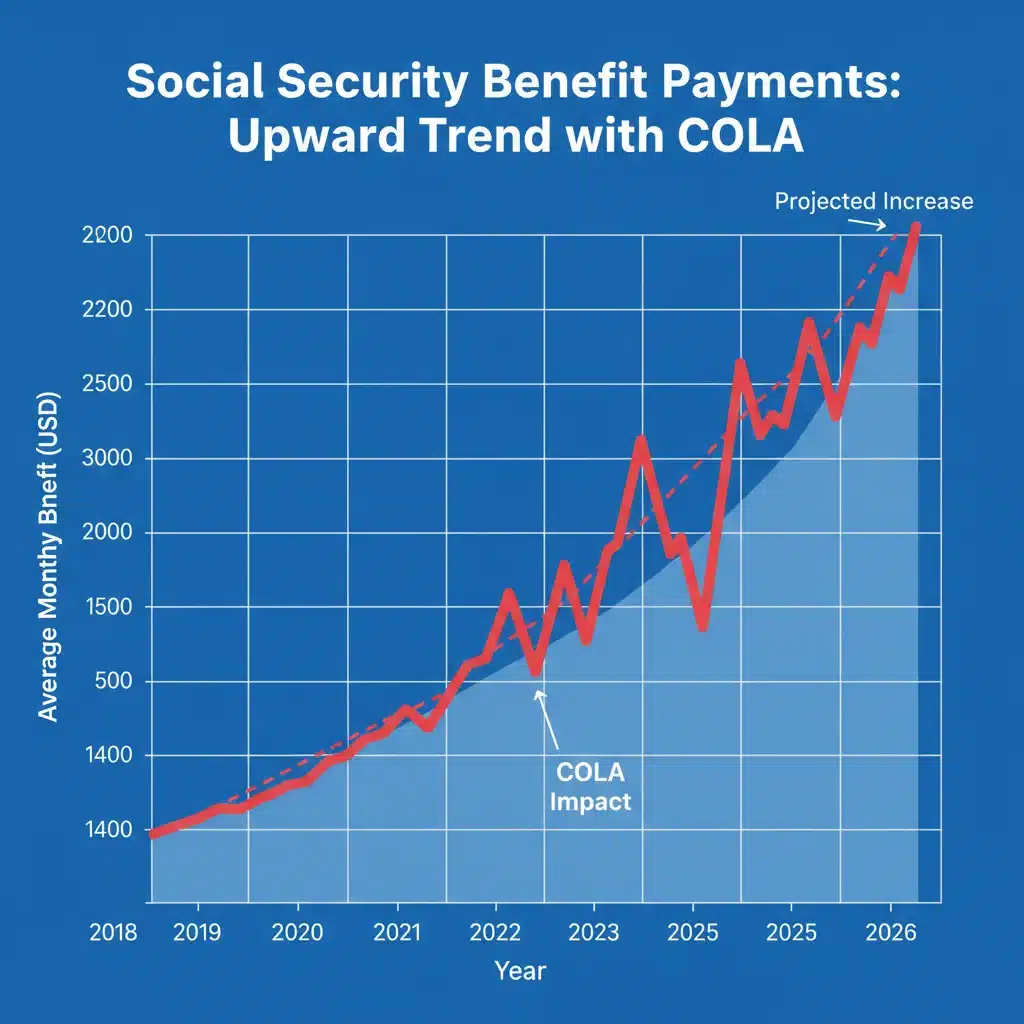
Understanding these historical patterns is crucial for appreciating the value of the Social Security 2026 COLA. It demonstrates that the system is designed to adapt, albeit with a time lag, to the realities of the economy. While some argue for alternative inflation measures, the current CPI-W based system has been instrumental in preserving the purchasing power of benefits for millions. The ongoing discussions about the adequacy of COLA for retirees, particularly concerning healthcare costs which tend to rise faster than general inflation, remain a critical area of focus for policymakers and advocacy groups. Nevertheless, a 3.5% increase for Social Security 2026 would be a welcome development, building on a recent trend of more robust adjustments that help beneficiaries keep pace with the cost of living.
The Impact of a 3.5% COLA on Your Monthly Benefits
So, what exactly would a 3.5% COLA mean for your monthly Social Security check in 2026? The impact would be straightforward: your current benefit amount would increase by 3.5%. While this might seem like a small percentage, it can translate into a significant amount over the course of a year, especially for those with higher benefit amounts. For example, if your current monthly benefit is $1,500, a 3.5% increase would add $52.50 to your check, bringing your new monthly benefit to $1,552.50. Over a full year, this amounts to an extra $630, which can make a considerable difference in managing daily expenses or covering unexpected costs.
Consider another scenario: if your monthly benefit is $2,000, a 3.5% COLA would add $70 to your check, resulting in a new monthly benefit to $2,070. Annually, this would mean an additional $840. These examples illustrate the tangible benefits of the Social Security 2026 COLA. For many retirees, this additional income can help offset rising costs for essentials like groceries, utilities, and prescription medications, thereby improving their overall financial stability and quality of life. It’s not just about keeping pace; it’s about providing a bit more breathing room in increasingly tight budgets.
It’s important to remember that the COLA applies to all types of Social Security benefits, including retirement, survivor, and disability benefits. This means that a wide range of individuals and families will experience the positive effects of the Social Security 2026 adjustment. While the exact amount of the COLA is not finalized until later in the year, these projections allow beneficiaries to begin planning for potential increases. This forward-looking approach can help individuals adjust their budgets, plan for discretionary spending, or even consider saving a portion of the increase to build a stronger financial cushion. The cumulative effect of these annual adjustments over a retiree’s lifetime can be substantial, underscoring the long-term value of the COLA mechanism in preserving financial security.
Planning for Social Security 2026: Strategies to Maximize Your Benefits
Beyond simply receiving the COLA, there are several proactive strategies you can employ to maximize your Social Security benefits, both in anticipation of Social Security 2026 and throughout your retirement. One of the most significant decisions is when to claim your benefits. While you can start receiving benefits as early as age 62, your monthly payment will be permanently reduced. Waiting until your Full Retirement Age (FRA) will entitle you to 100% of your earned benefits. For every year you delay claiming past your FRA, up to age 70, your benefits increase by approximately 8% per year through delayed retirement credits. This can lead to a substantially higher monthly check, a boost that will then be compounded by future COLA adjustments like the projected 3.5% for Social Security 2026.
Another crucial aspect of maximizing your benefits involves understanding your earnings record. Social Security benefits are calculated based on your 35 highest-earning years. If you have fewer than 35 years of work, or if some of your earlier earning years were low, continuing to work even part-time in retirement can replace those lower-earning years with higher ones, potentially increasing your overall benefit amount. Regularly checking your Social Security earnings statement, available through your ‘My Social Security’ account online, is essential to ensure accuracy and identify any discrepancies. Correcting errors can significantly impact your future benefit calculations, making this a vital step in financial planning for Social Security 2026 and beyond.
Furthermore, understanding how working in retirement can affect your benefits is important. If you claim benefits before your FRA and continue to work, your benefits may be subject to an earnings limit. If you earn above this limit, a portion of your benefits may be temporarily withheld. However, once you reach your FRA, these earnings limits no longer apply, and you can earn as much as you want without affecting your Social Security payments. Strategic planning around these rules can help you optimize both your work income and your Social Security benefits, ensuring you make the most of the Social Security 2026 COLA and all subsequent adjustments. Consulting with a financial advisor specializing in retirement planning can provide personalized guidance tailored to your specific situation, helping you navigate these complexities and make informed decisions.
The Broader Economic Picture: Inflation and the Future of COLA
The projected 3.5% COLA for Social Security 2026 is a direct reflection of ongoing inflationary pressures within the economy. Understanding the broader economic picture, particularly the factors driving inflation, is crucial for anticipating future COLA adjustments. Factors such as global supply chain dynamics, energy prices, wage growth, and consumer demand all play a significant role in shaping the inflation rate. When these factors combine to push prices higher, the CPI-W rises, leading to larger COLA increases. Conversely, a period of economic slowdown or disinflation could result in smaller adjustments.
Economists are constantly monitoring these indicators to forecast inflation trends. While the immediate future points to continued, albeit potentially moderating, inflation, the long-term outlook is less certain. The Federal Reserve’s monetary policy decisions, aimed at controlling inflation, will also have a profound impact. If the Fed’s efforts are successful in bringing inflation down to its target rate, future COLA adjustments might stabilize at lower percentages. However, unforeseen global events or domestic economic shifts could always alter these projections. The adaptability of the COLA mechanism is its strength, ensuring that Social Security benefits remain relevant in a dynamic economic environment.
The discussion around the future of COLA also often includes debates about alternative inflation measures. Some argue that the CPI-W does not adequately capture the unique spending patterns of seniors, particularly concerning rising healthcare costs. Proposals for a ‘CPI-E’ (Consumer Price Index for the Elderly) have been put forth as a more accurate measure for Social Security beneficiaries. While such changes are legislative matters and not immediately on the horizon for Social Security 2026, they highlight the ongoing efforts to ensure that COLA effectively serves its purpose of protecting the purchasing power of retirees. For now, beneficiaries should continue to monitor the CPI-W and economic forecasts to stay informed about potential future adjustments.
Beyond the Numbers: The Real-World Impact of COLA
While the percentage increase of Social Security 2026 COLA is important, its real-world impact extends far beyond mere numbers on a check. For many, Social Security represents a significant, if not primary, source of income in retirement. A 3.5% increase, therefore, can directly influence their ability to afford essential goods and services, maintain their health, and participate in their communities. It can mean the difference between struggling to make ends meet and enjoying a comfortable and dignified retirement.
Consider the rising costs of healthcare. Even with Medicare, out-of-pocket expenses for prescriptions, deductibles, and co-pays can be substantial. A COLA increase helps to alleviate some of this financial burden, enabling seniors to access necessary medical care without having to choose between their health and other basic needs. Similarly, the cost of housing, whether rent or property taxes, continues to climb in many areas. The Social Security 2026 COLA can provide crucial support in managing these increasing expenses, helping beneficiaries to remain in their homes and communities.

Moreover, the psychological impact of a COLA increase should not be underestimated. Knowing that your benefits are adjusting to keep pace with inflation can provide a sense of security and peace of mind. It reduces financial stress and allows retirees to focus on enjoying their golden years, pursuing hobbies, spending time with family, and maintaining an active lifestyle. The Social Security 2026 COLA, therefore, contributes not just to financial well-being but also to the overall quality of life for millions of Americans, affirming the program’s vital role as a cornerstone of retirement security.
Navigating Potential Challenges: Medicare Premiums and Taxes
While a 3.5% COLA for Social Security 2026 is undoubtedly good news, it’s essential to consider how it interacts with other aspects of your financial life, particularly Medicare premiums and income taxes. Medicare Part B premiums, which are typically deducted directly from Social Security checks, are also subject to annual adjustments. Historically, a significant portion of COLA increases has sometimes been absorbed by rising Medicare premiums, especially for higher-income beneficiaries who may pay more. However, the ‘hold harmless’ provision generally protects most beneficiaries from a reduction in their net Social Security benefit due to Medicare premium increases, meaning their Part B premium increase cannot exceed their COLA increase. This is an important safeguard for many, but it’s still crucial to be aware of potential premium adjustments.
Another factor to consider is the taxation of Social Security benefits. Depending on your ‘provisional income’ – which includes your adjusted gross income, tax-exempt interest, and half of your Social Security benefits – a portion of your Social Security benefits may be subject to federal income tax. An increase in your benefits due to the Social Security 2026 COLA could, for some individuals, push their provisional income into a higher tax bracket, leading to a larger portion of their Social Security benefits being taxed. While this typically affects individuals with significant other income streams in retirement, it’s a factor worth considering in your overall financial planning.
Furthermore, some states also tax Social Security benefits, though many have moved to exempt them. It’s important to understand your state’s tax laws regarding Social Security. The interplay between COLA increases, Medicare premiums, and income taxes highlights the complexity of retirement finances. While the Social Security 2026 COLA provides a beneficial boost, a holistic view of your financial situation is necessary to fully understand its net impact. Regularly reviewing your budget, understanding your tax obligations, and planning for potential increases in healthcare costs are all crucial steps in maximizing the benefit of any COLA adjustment.
The Role of Advocacy and Future Outlook for Social Security
The consistent adjustment of Social Security benefits through COLA is not just an automatic process; it’s a testament to ongoing advocacy efforts and the commitment to maintaining the program’s integrity. Organizations representing seniors and retirees continuously monitor economic conditions and lobby policymakers to ensure that COLA remains a robust mechanism for protecting beneficiaries’ purchasing power. These efforts often involve advocating for different inflation measures, such as the aforementioned CPI-E, which they believe would more accurately reflect the costs faced by older Americans.
Looking ahead beyond Social Security 2026, the long-term solvency of the Social Security program remains a critical topic of discussion. While the program is currently able to pay full benefits, projections indicate that without legislative action, the trust funds could be depleted in the coming decades, leading to a reduction in benefits. Various proposals for addressing this challenge include raising the full retirement age, increasing the Social Security tax rate, adjusting the COLA calculation, or modifying how benefits are taxed. These are complex issues with significant implications for future generations of retirees.
For current and future beneficiaries, staying informed about these discussions is paramount. Understanding the potential changes and participating in the democratic process can help shape the future of Social Security. While the Social Security 2026 COLA offers a positive immediate outlook, the long-term health of the program relies on thoughtful policy decisions. The continued strength of Social Security, bolstered by adjustments like COLA, is essential for providing a secure financial foundation for millions of Americans in their retirement years. Engaging with the process and advocating for solutions that protect benefits will ensure that Social Security remains a vital source of support for generations to come, adapting to economic realities and safeguarding the well-being of its beneficiaries.
Conclusion: A Brighter Outlook for Social Security 2026 Beneficiaries
The projected 3.5% Cost-of-Living Adjustment for Social Security 2026 offers a promising outlook for millions of beneficiaries. This anticipated increase reflects the ongoing efforts of the Social Security Administration to ensure that the purchasing power of retirees, survivors, and disabled individuals keeps pace with inflation. While economic forecasts are always subject to change, the current projections suggest a significant and welcome boost to monthly benefits, providing much-needed financial relief in an environment of rising costs.
Understanding the intricate process of COLA calculation, recognizing historical trends, and appreciating the real-world impact of these adjustments are all vital for informed financial planning. A 3.5% increase can translate into hundreds of additional dollars annually, directly influencing beneficiaries’ ability to cover essential expenses, manage healthcare costs, and maintain a dignified standard of living. Moreover, by proactively engaging in strategies to maximize your benefits, such as strategic claiming age and monitoring your earnings record, you can further enhance your financial security.
As we look forward to Social Security 2026, it’s clear that the program continues to serve as a critical safety net for American families. While challenges related to long-term solvency and debates over inflation measures persist, the annual COLA remains a powerful tool in preserving the value of benefits. This projected increase is not just a number; it represents a tangible improvement in the financial well-being and peace of mind for millions, underscoring the enduring importance of Social Security in our society. By staying informed and planning strategically, beneficiaries can make the most of this positive adjustment and continue to build a secure financial future.