Financial Planning 2026: Boost Net Worth 10% by December

Financial Planning for 2026: A Step-by-Step Guide to Achieving a 10% Increase in Net Worth by December
Are you ready to take control of your financial future? As we look towards 2026, the opportunity to significantly enhance your financial well-being is within reach. This comprehensive guide is designed to empower you with the knowledge and strategies needed for effective financial planning 2026, with the ambitious yet achievable goal of increasing your net worth by a substantial 10% by December. Whether you’re a seasoned investor or just starting your financial journey, these steps will provide a clear roadmap to success.
Many people dream of financial stability and growth, but without a concrete plan, these dreams often remain just that – dreams. Successful financial planning 2026 requires more than just good intentions; it demands dedication, consistent effort, and a well-thought-out strategy. This article will delve into practical, actionable steps, from meticulous budgeting and strategic debt management to smart investing and income diversification. We’ll explore how each component plays a vital role in building wealth and achieving your financial aspirations.
Understanding Your Current Financial Landscape: The Foundation of Financial Planning 2026
Before you can chart a course for where you want to go, you must first understand where you are. This initial phase of financial planning 2026 is crucial for setting realistic goals and identifying areas for improvement. It involves a thorough assessment of your current financial situation, encompassing assets, liabilities, income, and expenses.
Calculating Your Net Worth
Your net worth is a fundamental benchmark of your financial health. It’s the total value of your assets minus your liabilities. To calculate it, list all your assets:
- Liquid Assets: Cash, checking accounts, savings accounts.
- Investments: Stocks, bonds, mutual funds, retirement accounts (401k, IRA), real estate (excluding primary residence if you have a mortgage, or include its market value if owned outright), cryptocurrencies.
- Personal Property: Vehicles, jewelry, collectibles (only if they have significant resale value).
Next, list all your liabilities:
- Debts: Credit card balances, student loans, car loans, personal loans, mortgages.
Subtract your total liabilities from your total assets. The resulting number is your net worth. Make a note of this figure; it will be your starting point for increasing your net worth by 10% through strategic financial planning 2026.
Analyzing Your Income and Expenses
A detailed understanding of your cash flow is indispensable for effective financial planning 2026. Track every dollar that comes in and goes out for at least one to three months. This can be done using budgeting apps, spreadsheets, or even a simple notebook. Categorize your expenses to identify where your money is truly going.
- Fixed Expenses: Rent/mortgage, loan payments, insurance premiums, subscriptions. These are generally consistent month-to-month.
- Variable Expenses: Groceries, dining out, entertainment, utilities (which can fluctuate), transportation. These can vary significantly.
Identifying your income sources and understanding your spending habits will reveal opportunities for savings and optimization, forming the backbone of your financial planning 2026 strategy.
Setting Clear Financial Goals for 2026
With your current financial picture in view, the next step in financial planning 2026 is to define clear, measurable, and achievable goals. Your overarching goal is a 10% increase in net worth by December 2026. Break this down into smaller, manageable targets.
SMART Goals for Net Worth Growth
Apply the SMART framework to your financial goals:
- Specific: Instead of “save more money,” aim for “save an additional $X per month.”
- Measurable: Your 10% net worth increase is a clear metric.
- Achievable: Set realistic targets based on your income and expenses. A 10% increase is aggressive but often attainable with concerted effort.
- Relevant: Ensure your goals align with your broader life aspirations.
- Time-bound: The deadline is December 2026, with smaller monthly or quarterly milestones.
For example, if your current net worth is $100,000, your target net worth by December 2026 would be $110,000. This means you need to generate an additional $10,000 through savings, investments, and/or debt reduction. Breaking this down further, you’d aim for approximately an $833 increase in net worth per month ($10,000 / 12 months).
Budgeting for Success: The Core of Financial Planning 2026
Budgeting is not about restriction; it’s about empowerment. It’s the most powerful tool in your financial planning 2026 arsenal, allowing you to allocate your money intentionally towards your goals. A well-structured budget provides clarity and control over your finances.
The 50/30/20 Rule
A popular and effective budgeting framework is the 50/30/20 rule:
- 50% for Needs: Essential expenses like housing, utilities, groceries, transportation, and minimum debt payments.
- 30% for Wants: Discretionary spending such as dining out, entertainment, hobbies, vacations, and shopping.
- 20% for Savings and Debt Repayment: This portion is crucial for increasing your net worth. It includes contributions to savings accounts, investment accounts, and extra payments towards high-interest debt.
Adjust these percentages to fit your unique situation, but ensure the savings and debt repayment category is robust enough to support your 10% net worth growth target. This focused approach to financial planning 2026 will yield significant results.
Cutting Unnecessary Expenses
Review your variable expenses with a critical eye. Are there subscriptions you no longer use? Can you reduce your dining-out budget by cooking more at home? Even small cuts, when consistent, can free up significant funds for savings and investments. Consider a “no-spend” challenge for a week or a month to identify areas where you can trim back.
Strategic Debt Management: A Key Pillar of Financial Planning 2026
Debt, especially high-interest debt, can be a significant drag on your net worth. Effectively managing and reducing debt is a critical component of successful financial planning 2026.
Prioritizing High-Interest Debt
Focus on paying down debts with the highest interest rates first, such as credit card balances. This strategy, often called the “debt avalanche” method, saves you the most money in interest over time. Allocate any extra funds from your budget cuts directly to these debts.
Consider Debt Consolidation or Refinancing
If you have multiple high-interest debts, consider options like a personal loan for consolidation or refinancing your mortgage or student loans if you can secure a lower interest rate. Lowering your interest payments frees up more money to pay down the principal, accelerating your net worth growth as part of your financial planning 2026.
Smart Investing for Net Worth Growth in 2026
Investing is where your money truly starts to work for you. For your financial planning 2026 to achieve a 10% net worth increase, strategic investments will play a crucial role.
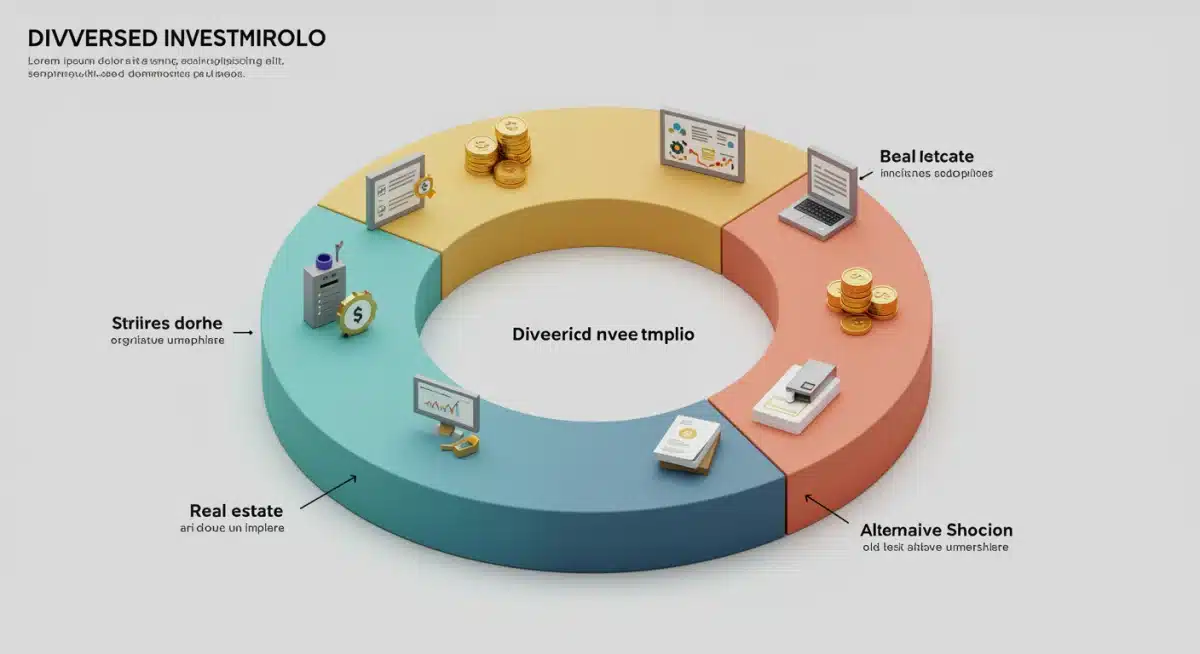
Diversification is Key
Don’t put all your eggs in one basket. Diversify your investments across different asset classes, industries, and geographies to mitigate risk. Common investment vehicles include:
- Stocks: Ownership in companies, offering potential for capital appreciation.
- Bonds: Loans to governments or corporations, providing fixed income.
- Mutual Funds/ETFs: Basket of various investments, offering instant diversification.
- Real Estate: Can provide rental income and appreciation, though it requires significant capital.
Automate Your Investments
Set up automatic transfers from your checking account to your investment accounts. This ensures consistency and leverages the power of dollar-cost averaging, where you invest a fixed amount regularly, regardless of market fluctuations. This disciplined approach is vital for effective financial planning 2026.
Review and Rebalance Your Portfolio
Periodically review your investment portfolio to ensure it aligns with your risk tolerance and financial goals. Market changes can cause your asset allocation to drift, so rebalancing (selling some assets that have grown and buying more of those that have lagged) helps maintain your desired risk profile.
Increasing Your Income: Accelerating Your Financial Planning 2026 Goals
While cutting expenses and investing wisely are crucial, increasing your income can significantly accelerate your progress towards a 10% net worth increase in 2026. This aspect of financial planning 2026 often gets overlooked but can be incredibly impactful.
Negotiate Your Salary
If you’re employed, prepare to negotiate for a raise. Research average salaries for your role and industry, highlight your achievements, and present a compelling case for increased compensation. A higher salary directly boosts your income, allowing more funds for savings and investments.
Develop a Side Hustle
Consider starting a side hustle based on your skills and interests. This could be freelancing, consulting, selling handmade goods, driving for a ride-share service, or teaching. Even a few hundred extra dollars a month can make a substantial difference when consistently applied to your financial goals.
Monetize Your Hobbies or Skills
Do you have a skill that others would pay for? Photography, writing, graphic design, web development, tutoring, or even pet sitting can be turned into income streams. Explore platforms that connect freelancers with clients to find opportunities that fit your schedule and expertise.
Protecting Your Assets: An Essential Part of Financial Planning 2026
Growing your net worth is only half the battle; protecting it is equally important. Unexpected events can derail even the best financial planning 2026 strategies if you’re not adequately prepared.
Build an Emergency Fund
Aim to have at least 3-6 months’ worth of essential living expenses saved in an easily accessible, high-yield savings account. This fund acts as a buffer against job loss, medical emergencies, or unexpected home repairs, preventing you from dipping into investments or incurring new debt.
Review Your Insurance Coverage
Ensure you have adequate insurance coverage for health, auto, home, and life. Underinsurance can lead to catastrophic financial losses in the event of an unforeseen crisis. Regularly review your policies to ensure they meet your current needs and offer the best value.
Estate Planning
While often associated with later life, basic estate planning, such as creating a will and designating beneficiaries for your accounts, is crucial. It ensures your assets are distributed according to your wishes and can prevent complex and costly legal battles for your loved ones.
Monitoring and Adjusting Your Financial Plan for 2026
Financial planning 2026 is not a one-time event; it’s an ongoing process. Regular monitoring and adjustments are vital to staying on track and adapting to life changes.
Regular Financial Reviews
Schedule monthly or quarterly financial reviews. During these sessions:
- Track Progress: Compare your actual income and expenses against your budget.
- Re-calculate Net Worth: Update your net worth calculation to see how much closer you are to your 10% goal.
- Assess Investments: Check the performance of your investments and make any necessary adjustments.
- Review Goals: Are your goals still relevant? Do they need to be modified based on new circumstances?
These reviews allow you to celebrate successes, identify challenges, and make informed decisions to keep your financial planning 2026 on course.
Adapting to Life Changes
Life is unpredictable. A new job, a major purchase, a family expansion, or an unexpected expense can all impact your financial situation. Be flexible and willing to adjust your plan as circumstances change. The key is to adapt thoughtfully, rather than abandoning your financial goals entirely.
Advanced Strategies to Supercharge Your Financial Planning 2026
Once you have the fundamentals in place, consider these advanced strategies to further accelerate your net worth growth and optimize your financial planning 2026.
Tax-Advantaged Accounts
Maximize contributions to tax-advantaged accounts like 401(k)s, IRAs (Traditional or Roth), HSAs (Health Savings Accounts), and 529 plans. These accounts offer significant tax benefits, such as tax-deferred growth or tax-free withdrawals in retirement, which can substantially boost your long-term net worth. Understanding and utilizing these vehicles is a cornerstone of sophisticated financial planning 2026.
Real Estate Investment
Beyond your primary residence, consider investing in real estate. This could include rental properties, REITs (Real Estate Investment Trusts), or even crowdfunding platforms. Real estate can provide passive income, appreciation, and tax advantages, acting as a powerful lever for increasing net worth. However, it requires careful research and understanding of the market.
Evaluating Alternative Investments
For those with a higher risk tolerance and a solid financial foundation, alternative investments like peer-to-peer lending, venture capital, or even certain collectibles might offer higher returns. Always approach these with caution, significant due diligence, and only allocate a small portion of your portfolio. They are not suitable for everyone, but for some, they can be a component of aggressive financial planning 2026.
Optimizing Your Credit Score
A good credit score is not just for borrowing; it affects insurance rates, apartment rentals, and even some job applications. Maintain a high credit score by paying bills on time, keeping credit utilization low, and regularly checking your credit report for errors. A strong credit score can save you money on interest and open doors to better financial products, indirectly contributing to your net worth.

Leveraging Technology for Your Financial Planning 2026
In today’s digital age, numerous tools and apps can simplify and enhance your financial planning 2026 efforts. Embrace technology to streamline your financial management.
Budgeting Apps
Apps like Mint, YNAB (You Need A Budget), Personal Capital, or Simplifi can automate expense tracking, categorize transactions, and provide visual insights into your spending habits. They can also help you set and stick to budgets, making the process less tedious and more effective.
Investment Platforms
Robo-advisors (e.g., Betterment, Wealthfront) offer automated investment management with low fees, making investing accessible even for beginners. Traditional brokerage platforms (e.g., Fidelity, Vanguard, Charles Schwab) provide more control for self-directed investors. Choose a platform that aligns with your investment style and knowledge level.
Financial Calculators
Utilize online calculators for compound interest, retirement planning, mortgage payments, and debt payoff. These tools can help you visualize the impact of your financial decisions and motivate you to stay on track with your financial planning 2026 goals.
Maintaining Motivation and Discipline Throughout 2026
Achieving a 10% net worth increase by December 2026 requires sustained motivation and discipline. Financial journeys often have ups and downs, and it’s crucial to stay committed.
Celebrate Small Wins
Acknowledge and celebrate every milestone, no matter how small. Paid off a credit card? Saved an extra $100? Reached a new net worth figure? These small victories reinforce positive financial habits and keep you motivated for the larger goal of financial planning 2026.
Educate Yourself Continuously
The financial world is constantly evolving. Stay informed by reading financial news, books, and blogs. The more you understand about personal finance and investing, the more confident and capable you’ll become in making informed decisions for your financial planning 2026.
Seek Professional Advice (When Needed)
Don’t hesitate to consult a certified financial planner if you feel overwhelmed or need specialized advice. A professional can provide tailored guidance, help you create a comprehensive plan, and ensure you’re on the right path to achieve your financial planning 2026 objectives.
Conclusion: Your Path to a Stronger Financial Future in 2026
Achieving a 10% increase in your net worth by December 2026 is an ambitious but entirely attainable goal with diligent financial planning 2026. By systematically assessing your current situation, setting clear SMART goals, implementing a strict budget, strategically managing debt, making smart investments, exploring income-boosting opportunities, and protecting your assets, you will build a robust financial foundation.
Remember, consistency is key. Small, consistent actions over time compound into significant results. Regularly review your progress, adapt your strategies as needed, and stay motivated. The steps outlined in this guide provide a powerful framework for your financial planning 2026 journey. Start today, commit to the process, and by the end of 2026, you’ll be celebrating not just a 10% increase in your net worth, but a profound sense of financial empowerment and security.
Your financial future is in your hands. Embrace the challenge of financial planning 2026, and unlock the potential for unprecedented growth and stability.