2026 CHIP Reauthorization: Impact on Children’s Health Benefits

The 2026 CHIP Reauthorization is set to reshape children’s health benefits across all 50 states, ensuring continued access to vital medical services for millions of American families. This legislative update aims to strengthen coverage, adapt to evolving healthcare needs, and maintain essential support for vulnerable populations nationwide.
Dive into the critical details of the 2026 CHIP Reauthorization: Impact on Children’s Health Benefits Across 50 States. This legislative milestone is more than just a renewal; it’s a recalibration of how millions of American children access vital healthcare. Understanding its nuances is crucial for families, healthcare providers, and policymakers alike.
The foundation of CHIP: A legacy of care
The Children’s Health Insurance Program (CHIP) has stood as a cornerstone of pediatric healthcare in the United States since its inception in 1997. Designed to provide low-cost health coverage to children in families who earn too much money to qualify for Medicaid but cannot afford private insurance, CHIP has consistently bridged a critical gap in the nation’s healthcare landscape. Its bipartisan support over decades underscores the universal recognition of its importance in safeguarding the well-being of future generations. As we approach the 2026 reauthorization, it’s essential to reflect on the program’s enduring legacy and the foundational principles that continue to guide its mission.
CHIP’s success lies not just in its broad reach but in its flexibility, allowing states to tailor programs to best suit their unique populations and healthcare infrastructures. This adaptability has fostered innovation and efficiency, making CHIP a highly effective model for public health intervention. The upcoming reauthorization is an opportunity to build upon these strengths, ensuring the program remains responsive to contemporary health challenges and economic realities.
Historical context and evolution
- 1997 Creation: Established under the Balanced Budget Act to cover children above Medicaid income thresholds.
- State Flexibility: Allowed states to design their own CHIP programs, either as an expansion of Medicaid, a separate program, or a combination.
- Impact on Uninsured Rates: Significantly reduced the number of uninsured children across the U.S.
The program’s evolution has seen various reauthorizations and adjustments, each reflecting the changing needs of children and families. From addressing mental health parity to expanding access to dental care, CHIP has consistently adapted to provide comprehensive coverage. This continuous refinement is a testament to the program’s commitment to holistic child health.
In conclusion, the historical journey of CHIP demonstrates a unwavering commitment to children’s health. The 2026 reauthorization is poised to continue this vital work, adapting its framework to ensure that its legacy of care remains strong and relevant for years to come, impacting every state with robust health benefits.
Key provisions and proposed changes for 2026
The upcoming 2026 CHIP Reauthorization is anticipated to introduce several significant provisions and changes, aiming to modernize the program and enhance its effectiveness. Discussions are currently centered on adapting CHIP to the evolving healthcare landscape, ensuring it continues to meet the needs of eligible children and families across all 50 states. These proposed changes reflect a commitment to improving access, quality, and affordability of care.
One of the primary areas of focus is the potential for increased federal matching rates for states, which could provide greater financial stability and encourage states to expand their programs. Additionally, there’s a strong emphasis on integrating mental health services more seamlessly into standard CHIP benefits, recognizing the growing importance of behavioral health for children and adolescents. The reauthorization is also expected to address the impact of technological advancements on healthcare delivery, potentially promoting telehealth and other digital health solutions.
Anticipated legislative adjustments
- Funding Mechanisms: Potential adjustments to federal matching funds to stabilize state programs.
- Benefit Enhancements: Expansion of covered services, particularly in mental health and substance abuse treatment.
- Eligibility Thresholds: Review of income and family size criteria to reflect current economic conditions.
Beyond funding and benefits, the reauthorization is likely to refine administrative processes to reduce burdens on families and streamline enrollment. This includes exploring options for simplified application processes and improved coordination with other federal and state benefit programs. The goal is to make CHIP as accessible and user-friendly as possible, minimizing barriers to care for eligible children.
Ultimately, the key provisions of the 2026 CHIP Reauthorization are designed to fortify the program’s structure and expand its reach. By addressing funding, benefits, and administrative efficiency, the reauthorization seeks to ensure that CHIP remains a robust and responsive lifeline for children’s health across the nation, providing a stable foundation for their future well-being.
State-by-state variations in CHIP implementation
While CHIP is a federal program, its implementation varies significantly from state to state, reflecting diverse local needs, policy choices, and healthcare infrastructures. The 2026 CHIP Reauthorization will continue to acknowledge and likely reinforce this state-level flexibility, allowing each state to design a program that best serves its unique population of children and families. Understanding these variations is crucial for appreciating the program’s nuanced impact nationwide.
Some states operate CHIP as an extension of their Medicaid program, offering similar benefits and administrative structures. Others run separate CHIP programs, often with distinct benefit packages, cost-sharing requirements, and eligibility rules. A third model involves a combination of both approaches. These differences mean that a family’s experience with CHIP can differ considerably depending on their state of residence, from enrollment processes to the specific services covered.
How states tailor CHIP
- Medicaid Expansion: Some states integrate CHIP into their Medicaid program, offering a unified system.
- Separate Programs: Other states run standalone CHIP programs with their own rules and benefit designs.
- Hybrid Models: A combination approach where some children are covered under Medicaid expansion and others under a separate CHIP program.
These state-specific variations also extend to outreach efforts and enrollment strategies. States with higher proportions of eligible but uninsured children often implement more aggressive outreach campaigns, while others might focus on streamlining renewal processes. The 2026 reauthorization aims to support states in their efforts to optimize these approaches, potentially offering incentives for best practices in enrollment and retention.
In essence, the strength of CHIP lies in its ability to be both a national safety net and a locally adaptable solution. The 2026 CHIP Reauthorization will continue to empower states to craft programs that are most effective for their communities, ensuring that the impact on children’s health benefits is both comprehensive and tailored to specific regional contexts.
Eligibility and enrollment: What families need to know
For families navigating the complexities of healthcare, understanding CHIP eligibility and enrollment processes is paramount. The 2026 CHIP Reauthorization is expected to maintain the program’s core commitment to providing coverage for children whose families earn too much for Medicaid but cannot afford private insurance. However, potential adjustments to income thresholds and application procedures could influence who qualifies and how they access benefits. Being well-informed is the first step toward securing vital health coverage for children.
Eligibility for CHIP is primarily based on family income relative to the federal poverty level (FPL), though specific percentages vary by state. Most states cover children up to 200% or 250% of the FPL, with some extending coverage even higher. It’s crucial for families to check their state’s specific guidelines, as these can be updated following the reauthorization. The enrollment process typically involves submitting an application, providing income verification, and sometimes attending an interview, though many states offer online applications for convenience.
Key eligibility factors
- Income Levels: Based on a percentage of the Federal Poverty Level (FPL), varying by state.
- Age Limits: Generally covers children up to age 19, though some states may have slightly different rules.
- Citizenship/Residency: Children must be U.S. citizens, nationals, or qualified immigrants residing in the state.
The reauthorization might also focus on improving continuity of coverage, making it easier for children to remain enrolled without unnecessary interruptions. This could involve simplified renewal processes or automatic enrollment for those who continue to meet eligibility criteria. Families should be proactive in responding to renewal notices to prevent any lapse in coverage.
In summary, the 2026 CHIP Reauthorization will continue to prioritize accessible eligibility and streamlined enrollment for families. Staying informed about state-specific income limits and application procedures is essential for ensuring that children receive the uninterrupted health benefits they need. The program remains a critical resource, making healthcare a reality for millions.
Impact on healthcare providers and state budgets
The 2026 CHIP Reauthorization extends its influence far beyond individual families, significantly impacting healthcare providers and state budgets across the nation. For providers, CHIP ensures a stable patient base and reimbursement for services rendered, contributing to the financial viability of pediatric care. For states, federal CHIP funding represents a substantial financial contribution, alleviating some of the burden of providing healthcare to low-income children. Any changes in the reauthorization could ripple through these critical areas.
Healthcare providers, including pediatricians, specialists, and hospitals, rely on CHIP to cover the costs of services for millions of children. The program’s stability allows them to plan for staffing, equipment, and service expansion. Potential adjustments to reimbursement rates or covered services under the 2026 reauthorization could necessitate operational changes for providers. Furthermore, the emphasis on integrated care models, such as mental health services, could require providers to adapt their practices to offer more comprehensive support.
Financial and operational considerations
- Provider Reimbursement: Ensures payments for services, supporting pediatric healthcare infrastructure.
- State Fiscal Stability: Federal matching funds reduce the financial strain on state budgets for children’s healthcare.
- Service Expansion: Encourages states and providers to offer a broader range of health services.
From a state budget perspective, the federal share of CHIP funding is a critical component of their healthcare expenditures. States often leverage these federal dollars to expand coverage beyond minimum requirements, invest in public health initiatives, and support preventive care programs. The 2026 reauthorization’s funding mechanisms will directly influence states’ capacity to maintain or enhance these efforts. Predictable and robust federal support is key to ensuring continuous, high-quality children’s health benefits without placing undue strain on state treasuries.
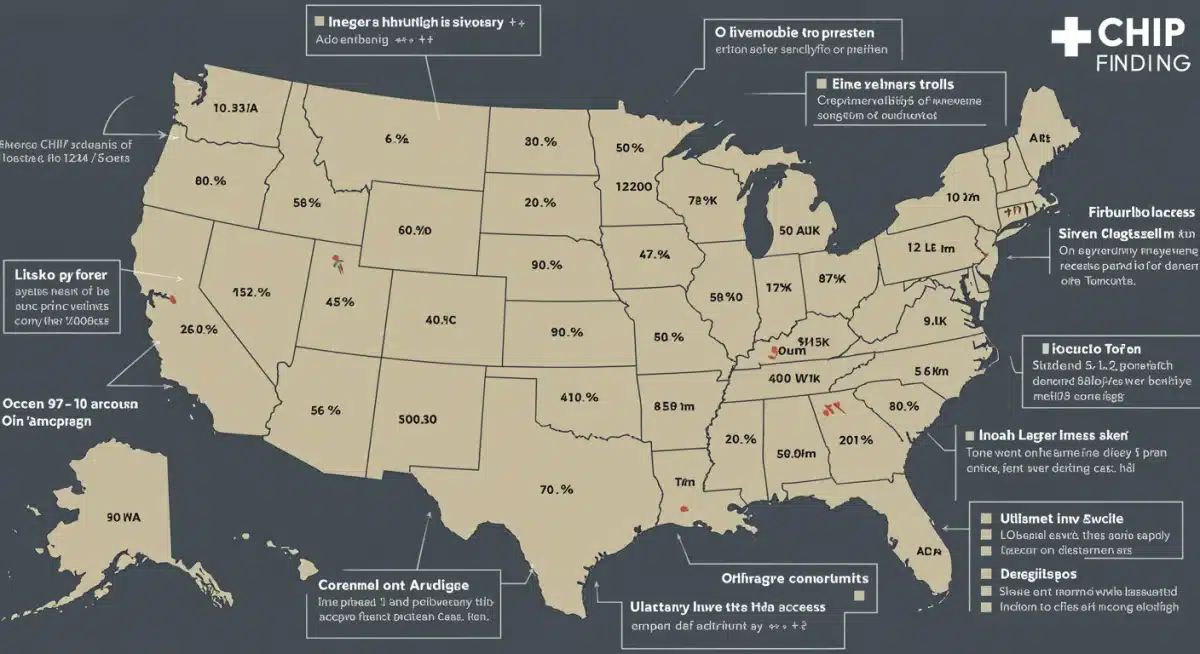
In conclusion, the 2026 CHIP Reauthorization is a pivotal moment for both healthcare providers and state financial planners. Its provisions will shape the operational landscape for those delivering care and determine the fiscal flexibility of states in supporting children’s health. A well-structured reauthorization is vital for sustaining a robust healthcare system for American children.
Future outlook: Challenges and opportunities for CHIP in 2026
As the 2026 CHIP Reauthorization approaches, the program faces a dynamic landscape of both challenges and opportunities. The healthcare environment is constantly evolving, influenced by technological advancements, shifting public health priorities, and economic fluctuations. Navigating these complexities will be crucial for ensuring CHIP remains a highly effective and relevant program for children’s health benefits across all 50 states.
One of the main challenges lies in maintaining consistent bipartisan support amidst a potentially changing political climate. Ensuring stable, long-term funding will be paramount to avoid disruptions in coverage. Another challenge involves addressing the rising costs of healthcare, particularly for specialized services and prescription drugs, while keeping premiums and co-pays affordable for families. The program must also adapt to new health threats, such as emerging infectious diseases and the long-term impacts of environmental factors on child health.
Navigating the path ahead
- Sustaining Bipartisan Support: Essential for long-term program stability and funding.
- Addressing Healthcare Costs: Balancing comprehensive benefits with affordability for families.
- Adapting to New Health Needs: Incorporating responses to emerging public health challenges and innovations.
However, these challenges also present significant opportunities. The reauthorization could catalyze further innovation in healthcare delivery, promoting telehealth, preventive care, and integrated behavioral health services. It offers a chance to strengthen data collection and analysis, allowing for more targeted interventions and a better understanding of children’s health outcomes. Furthermore, the reauthorization can reinforce CHIP’s role in promoting health equity, ensuring that all children, regardless of their background, have access to quality care.
The future outlook for CHIP in 2026 is one of careful consideration and strategic development. By proactively addressing challenges and seizing opportunities, the reauthorization can solidify CHIP’s position as a vital program, continuing its mission to provide comprehensive and accessible children’s health benefits, thereby securing a healthier future for the nation.
| Key Aspect | Brief Description |
|---|---|
| Reauthorization Core | Ensures continued funding and operation of CHIP beyond 2026. |
| State Variations | States retain flexibility in program design and benefit packages. |
| Eligibility & Enrollment | Income-based criteria with potential adjustments, simplified processes. |
| Future Focus | Emphasis on mental health, telehealth, and addressing rising costs. |
Frequently asked questions about 2026 CHIP Reauthorization
The primary goal is to ensure the continued funding and operation of the Children’s Health Insurance Program beyond 2026, guaranteeing that millions of eligible children across all 50 states maintain access to vital, low-cost health coverage. It also aims to modernize the program to meet evolving healthcare needs.
While core eligibility based on family income relative to the federal poverty level will likely remain, the reauthorization may include adjustments to income thresholds or streamline application processes. Families should consult their state’s specific guidelines, as these can be updated to reflect current economic conditions and policy goals.
There is a strong focus on enhancing benefits, particularly in areas like mental health and substance abuse treatment. The reauthorization may also encourage the integration of telehealth services and preventive care, ensuring a more comprehensive approach to children’s health across all participating states.
The 2026 CHIP Reauthorization will directly influence state budgets through federal matching funds. Stable and predictable federal support is crucial for states to maintain or expand their CHIP programs, reducing the financial burden on state treasuries while ensuring continuous health benefits for children.
Families should regularly check their state’s official CHIP program website, as well as federal healthcare resources like HealthCare.gov. Local health departments and community organizations often provide updates and assistance. Staying proactive in reviewing eligibility and renewal notices is also highly recommended.
Conclusion
The 2026 CHIP Reauthorization stands as a testament to the nation’s ongoing commitment to safeguarding the health of its youngest citizens. This legislative action is not merely a formality; it is a critical opportunity to fortify a program that has profoundly impacted millions of American children across all 50 states. By addressing funding, modernizing benefits, and refining administrative processes, the reauthorization aims to ensure CHIP remains a dynamic, responsive, and indispensable pillar of the U.S. healthcare system. Its success will continue to provide a vital safety net, offering peace of mind to families and building a healthier foundation for the future.