U.S. Job Market Boom: Sectors Driving 1.5 Million New Positions
U.S. Job Market Boom: Sectors Driving 1.5 Million New Positions
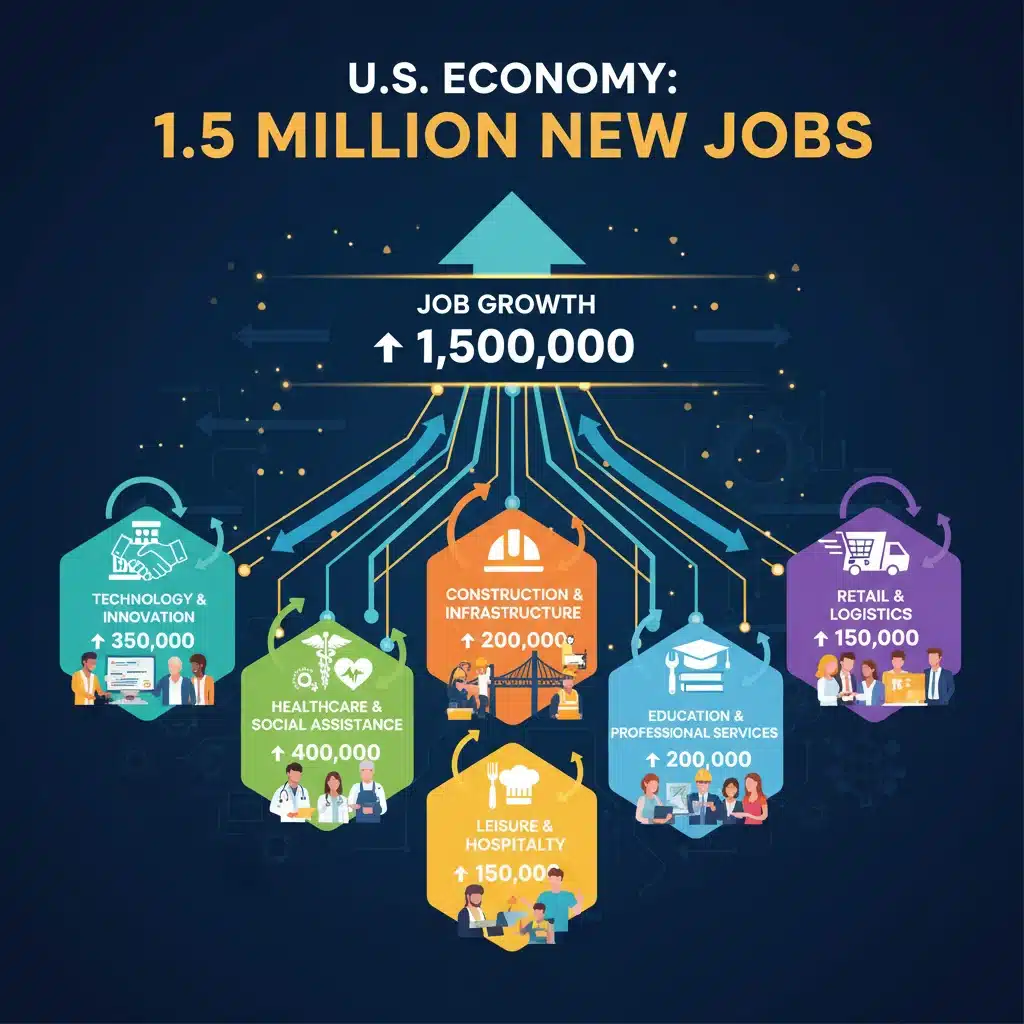
The United States economy has demonstrated remarkable resilience and dynamism in recent months, with the job market standing out as a particularly strong performer. Over the past six months, a staggering 1.5 million new positions have been added across various sectors, signaling robust growth and an optimistic outlook for workers and businesses alike. This significant US job growth is not uniform; rather, it is concentrated in specific industries that are experiencing heightened demand, innovation, and strategic investment. Understanding these trends is crucial for job seekers, policymakers, and investors looking to navigate the evolving economic landscape.
The addition of 1.5 million jobs in such a relatively short period underscores the underlying strength of the American labor market, defying earlier predictions of a more significant slowdown. This surge in employment reflects a combination of factors, including sustained consumer spending, business expansion, and a continued recovery from previous economic disruptions. While some sectors are undoubtedly leading the charge, the overall picture suggests a broad-based improvement that is creating opportunities for a diverse range of skill sets and experience levels. As we delve deeper into the specific industries contributing to this impressive US job growth, we will uncover the driving forces behind their success and what this means for the future of work in America.
Unpacking the Numbers: Where the Jobs Are
To truly appreciate the scope of this US job growth, it’s essential to break down the aggregate figures and identify the key sectors that are acting as primary engines of employment. While almost every industry has seen some level of hiring, several have significantly outpaced others, contributing disproportionately to the 1.5 million new jobs. These leading sectors often share common characteristics: they are either undergoing significant technological transformation, addressing critical societal needs, or benefiting from shifts in consumer behavior.
One of the most consistent contributors to job creation has been the healthcare and social assistance sector. This industry continues its long-standing trend of expansion, driven by an aging population, advancements in medical technology, and an increasing focus on personal well-being. Hospitals, outpatient care centers, nursing and residential care facilities, and individual and family services have all seen substantial increases in employment. The demand for doctors, nurses, therapists, and support staff remains high, indicating a robust and growing need for these essential services. This sector’s stability and consistent demand make it a cornerstone of the nation’s employment landscape.
Another significant area of growth is the leisure and hospitality sector. Despite facing considerable challenges during recent economic downturns, this industry has staged a remarkable comeback. As travel restrictions eased and consumer confidence returned, restaurants, hotels, arts, entertainment, and recreation venues experienced a surge in demand. This rebound has necessitated extensive hiring to meet the renewed interest in leisure activities and dining out. While often characterized by high turnover, the sheer volume of positions added in this sector has been a crucial component of the overall US job growth.
The professional and business services sector has also shown impressive strength, encompassing a wide array of specialized fields such as management consulting, scientific and technical services, administrative and support services, and temporary staffing. Businesses across all industries require expert advice, technological support, and flexible staffing solutions, driving demand for these services. The growth here reflects an economy that is increasingly reliant on specialized knowledge and outsourced functions, allowing companies to focus on their core competencies while leveraging external expertise.
Furthermore, the manufacturing sector, often thought of as a declining industry, has also contributed positively to this job surge. While not as dominant as in previous decades, specific segments of manufacturing, particularly those involved in advanced technologies, defense, and industries focused on reshoring production, have seen a revitalization. This growth is often tied to strategic investments and a push for greater domestic production capabilities, which contribute to a more diversified and resilient supply chain. The focus on high-tech manufacturing, in particular, is creating demand for skilled labor and engineers.
Finally, the construction sector has also been a steady performer, buoyed by ongoing infrastructure projects, residential housing demand, and commercial development. Both private and public investments in infrastructure have created numerous opportunities for skilled tradespeople, project managers, and engineers. The need for new housing and commercial spaces in growing urban and suburban areas continues to fuel this sector’s expansion, making it a reliable source of employment and a key indicator of economic health.
Driving Forces Behind the Surge in Employment
The impressive US job growth of 1.5 million new positions over the past six months is not a random occurrence; it is the result of several intertwined economic and societal factors. Understanding these underlying drivers provides deeper insight into the sustainability and future trajectory of the labor market.
Consumer Spending and Demand
A primary catalyst for job creation is robust consumer spending. When consumers feel confident about their financial future and the economy, they are more likely to spend on goods and services. This increased demand directly translates into businesses needing to hire more staff to produce, distribute, and sell their offerings. The recovery of the leisure and hospitality sector, for instance, is a direct reflection of renewed consumer confidence in travel, dining, and entertainment. Similarly, strong retail sales, both online and in brick-and-mortar stores, necessitate additional personnel in logistics, customer service, and sales roles.
Technological Advancements and Digital Transformation
Technology continues to be a significant disruptor and creator of jobs. While some fear automation’s impact on employment, the reality is that technological advancements often create new industries and roles. The professional and business services sector, for example, thrives on providing IT consulting, cybersecurity, data analytics, and cloud computing services. Even traditional industries like healthcare are leveraging technology for telehealth, electronic health records, and advanced diagnostic tools, requiring a new breed of tech-savvy professionals. This ongoing digital transformation fuels demand for software developers, data scientists, IT support specialists, and digital marketing experts.
Demographic Shifts and an Aging Population
The demographic landscape of the U.S. plays a crucial role, particularly in the healthcare and social assistance sector. As the baby boomer generation enters retirement age, the demand for medical care, elder care services, and specialized health support continues to rise. This demographic shift creates a persistent and growing need for healthcare professionals across all levels, from home health aides to specialized doctors. This factor ensures a steady baseline of demand for jobs in this critical sector, contributing significantly to sustained US job growth.
Government Spending and Infrastructure Projects
Government investment, particularly in infrastructure, serves as a powerful job creator. Large-scale projects, such as repairing roads, bridges, and public transportation systems, require a substantial workforce, from engineers and project managers to construction workers and material suppliers. These projects not only create direct jobs but also stimulate economic activity in related industries. The bipartisan support for infrastructure spending has provided a stable foundation for growth in the construction sector, ensuring a steady stream of employment opportunities.
Reshoring and Supply Chain Resilience
Recent global events have highlighted the vulnerabilities of extended supply chains, prompting many companies to reconsider their manufacturing strategies. The trend of ‘reshoring’ — bringing manufacturing operations back to the U.S. — is gaining traction. While not a massive wave, this strategic shift is contributing to job growth in the manufacturing sector, particularly in key industries vital for national security or critical goods. This focus on domestic production aims to enhance supply chain resilience and create more stable, higher-paying jobs within the country.
Small Business Expansion
Small businesses are often referred to as the backbone of the American economy, and their expansion is a vital component of US job growth. Entrepreneurship and the creation of new small enterprises contribute significantly to overall employment figures. When small businesses thrive, they hire more local talent, stimulating community economies. Supportive policies, access to capital, and a favorable business environment encourage this crucial segment of the economy to grow and create jobs.
Impact on the Economy and Workers
The addition of 1.5 million jobs has profound implications for both the broader economy and individual workers. This level of US job growth signifies a healthy and expanding economic environment, but it also presents specific challenges and opportunities.
Economic Stability and Confidence
A strong job market is a key indicator of economic stability. High employment rates mean more people are earning incomes, leading to increased consumer spending, which in turn fuels further economic activity. This positive feedback loop contributes to overall economic confidence, encouraging businesses to invest and expand, and consumers to spend. It can also help to stabilize inflation by increasing the supply of goods and services to meet demand, although wage growth in a tight labor market can also contribute to inflationary pressures.
Wage Growth and Improved Living Standards
In a competitive job market with high demand for labor, employers often need to offer higher wages and better benefits to attract and retain talent. This wage growth can lead to improved living standards for many Americans, allowing them to save more, invest, and spend on essential goods and services. However, it’s important to monitor whether wage growth keeps pace with inflation to ensure that real wages are indeed increasing, providing actual purchasing power gains for workers.
Reduced Unemployment and Underemployment
The robust US job growth naturally leads to lower unemployment rates. This means fewer people are actively seeking work without success, and more individuals are contributing to the economy. Furthermore, a strong job market can reduce underemployment, where individuals are working in jobs that do not fully utilize their skills or provide sufficient hours. With more opportunities available, workers can find positions that better match their qualifications and career aspirations.
Challenges: Labor Shortages and Skill Gaps
While positive, rapid job growth can also expose underlying challenges, particularly labor shortages and skill gaps in certain sectors. Employers in high-growth industries may struggle to find enough qualified candidates to fill open positions, leading to increased recruitment costs and potential delays in project completion. This highlights the ongoing need for workforce development programs, vocational training, and educational initiatives that align with the evolving demands of the job market. Bridging these skill gaps is crucial for sustaining long-term US job growth.
Looking Ahead: The Future of US Job Growth
Predicting the exact future of the U.S. job market is challenging, but current trends and underlying economic factors offer valuable insights into what lies ahead. The sustained US job growth over the past six months suggests a resilient economy, but several factors will shape its future trajectory.
Continued Sectoral Dominance
It is highly probable that the sectors currently driving job growth — healthcare, professional and business services, and leisure and hospitality — will continue to be significant contributors. Demographic trends will ensure persistent demand for healthcare, while the increasing complexity of business operations will fuel the need for specialized services. As long as consumer confidence remains stable, the leisure and hospitality sector should also continue its recovery and expansion.
Technological Evolution and AI Integration
The impact of artificial intelligence (AI) and other advanced technologies will increasingly shape the job market. While AI may automate some tasks, it is also expected to create entirely new roles and industries. The demand for AI specialists, data engineers, prompt engineers, and ethical AI developers will likely surge. Furthermore, workers across all sectors will need to adapt and acquire new skills to work alongside AI tools, making continuous learning and upskilling more critical than ever.
Green Economy and Sustainability Jobs
A growing focus on environmental sustainability and renewable energy is poised to create a new wave of jobs. Investments in green technologies, renewable energy infrastructure, energy efficiency, and sustainable manufacturing will drive demand for engineers, technicians, researchers, and project managers in these emerging fields. The transition to a greener economy represents a significant opportunity for future US job growth.
Global Economic Factors
The U.S. job market does not exist in isolation. Global economic conditions, geopolitical events, and international trade policies will continue to influence domestic employment trends. A stable global environment generally supports export-oriented industries and reduces supply chain disruptions, fostering a more favorable climate for job creation. Conversely, global instability could introduce headwinds.
Policy and Investment
Government policies related to education, infrastructure, innovation, and small business support will play a crucial role in shaping future job growth. Continued investment in research and development, vocational training, and accessible higher education can help ensure that the workforce possesses the skills needed for future jobs. Policies that encourage entrepreneurship and reduce barriers to entry for new businesses will also be vital.
Conclusion
The U.S. job market’s addition of 1.5 million new positions in the past six months is a testament to the nation’s economic resilience and adaptive capacity. This significant US job growth is driven by key sectors such as healthcare, professional services, leisure and hospitality, manufacturing, and construction, each responding to unique drivers like demographic shifts, technological advancements, and consumer demand. While this expansion brings economic stability, wage growth, and reduced unemployment, it also highlights the need to address labor shortages and skill gaps through continuous investment in education and workforce development.
Looking forward, the job market will continue to evolve, influenced by emerging technologies like AI, the burgeoning green economy, and global economic dynamics. For individuals, this means a continuous need for upskilling and adaptability. For businesses and policymakers, it underscores the importance of strategic planning, investment in human capital, and fostering an environment conducive to innovation and growth. The sustained positive trajectory of US job growth offers a hopeful outlook, emphasizing the ongoing opportunities for a vibrant and dynamic American workforce.