Micro-Credentials: Your Pathway to Career Advancement in 2026

In an era defined by rapid technological evolution and shifting economic landscapes, traditional education pathways are increasingly being supplemented, and in some cases, redefined by agile, focused learning opportunities. Among these, micro-credentials have emerged as a powerful catalyst for professional growth and career advancement. As we look towards 2026, the relevance and impact of micro-credentials are only set to intensify, offering individuals and organizations a flexible and effective means to bridge skill gaps, foster innovation, and stay competitive. This comprehensive guide delves into the practical applications of micro-credentials, exploring how they are shaping the future of work and providing a clear pathway to sustained career success.
The Evolving Landscape of Work and Learning
The world of work is undergoing a seismic transformation. Automation, artificial intelligence, and global interconnectedness are not just buzzwords; they are fundamental forces reshaping industries and job roles. This dynamic environment demands a workforce that is not only adaptable but also continuously learning. The traditional model of ‘learn once, work forever’ has been rendered obsolete. Today, lifelong learning is not merely an advantage; it is a necessity. This is where micro-credentials career advancement comes into sharp focus.
Degrees, while still valuable, often provide a broad foundation. However, the pace of change in specific industries means that the skills learned during a multi-year degree program can become outdated quickly. Employers are increasingly seeking candidates who possess highly specialized, in-demand skills that can be applied immediately. This demand has fueled the rise of alternative credentialing systems, with micro-credentials leading the charge.
What Exactly Are Micro-Credentials?
At their core, micro-credentials are certifications of specific competencies, skills, or knowledge acquired through short, focused learning experiences. Unlike traditional degrees, which can take years to complete, micro-credentials are typically earned in weeks or months. They are often digital, verifiable, and stackable, meaning they can be combined to form a more comprehensive skill set or even contribute towards a larger qualification. Think of them as building blocks for your professional profile, each block representing a distinct, valuable skill.
The beauty of micro-credentials lies in their specificity and agility. They are designed to address particular skill gaps identified by industries and employers. This direct alignment with market needs makes them incredibly attractive to both learners seeking to enhance their employability and organizations looking to upskill their workforce efficiently. The focus on practical application ensures that the knowledge gained is immediately transferable to real-world scenarios, making them a powerful tool for micro-credentials career advancement.
Why Micro-Credentials Matter for Career Advancement in 2026
The year 2026 is poised to be a pivotal moment for professionals navigating the complexities of the modern job market. The emphasis on agile skill acquisition will only grow, and micro-credentials will play a crucial role in enabling individuals to thrive. Here’s why they are becoming indispensable for career advancement:
- Targeted Skill Development: Micro-credentials allow individuals to acquire precise skills that are directly relevant to their career goals or current job responsibilities. Whether it’s mastering a new programming language, understanding data analytics tools, or developing leadership competencies, these credentials offer a focused learning path. This targeted approach is far more efficient than undertaking a broad degree program when you only need to fill a specific skill gap.
- Rapid Upskilling and Reskilling: In a fast-changing job market, the ability to quickly upskill (enhance existing skills) or reskill (learn entirely new skills) is paramount. Micro-credentials provide an accelerated route to acquiring new competencies, enabling professionals to adapt to evolving job requirements and pivot into new roles or industries with greater ease. This agility is key to sustained micro-credentials career advancement.
- Enhanced Employability and Competitiveness: Possessing in-demand micro-credentials signals to employers that you are proactive, adaptable, and committed to continuous learning. It demonstrates a practical skill set that can immediately add value. In a competitive job market, these certifications can differentiate candidates and significantly boost their employability.
- Cost-Effective Learning: Compared to traditional degree programs, micro-credentials are often far more affordable. This accessibility makes high-quality skill development available to a broader audience, democratizing access to education and professional growth opportunities.
- Flexibility and Accessibility: Many micro-credential programs are offered online, providing unparalleled flexibility for learners to study at their own pace and on their own schedule. This is particularly beneficial for working professionals who need to balance their learning with existing commitments.
- Verifiable and Transparent Skills: Digital micro-credentials often leverage blockchain technology or other secure platforms, making them easily verifiable and transparent. Employers can quickly confirm the authenticity of a credential and understand the specific skills it represents, fostering trust and streamlining the hiring process.
- Pathway to Higher Education (Stackability): While standalone, many micro-credentials are ‘stackable.’ This means they can be accumulated and, in some cases, count towards credits for larger degrees or diplomas. This offers a flexible pathway for individuals who may not be ready for a full degree but want to build towards one incrementally. This stackability is a game-changer for long-term micro-credentials career advancement.
Practical Applications of Micro-Credentials in 2026
The utility of micro-credentials extends across various sectors and professional scenarios. Here are some key practical applications that will be prominent in 2026:
1. Bridging the Digital Skills Gap
The digital transformation continues to accelerate, creating a significant demand for skills in areas like data science, artificial intelligence, cybersecurity, cloud computing, and digital marketing. Micro-credentials are perfectly suited to address this gap. Professionals can earn certifications in specific programming languages (Python, R), data visualization tools (Tableau, Power BI), AI/ML fundamentals, or cloud platforms (AWS, Azure, Google Cloud). This allows them to transition into new tech roles or enhance their existing roles with crucial digital competencies.
2. Enhancing Leadership and Soft Skills
While technical skills are vital, soft skills like critical thinking, emotional intelligence, communication, collaboration, and problem-solving remain equally, if not more, important. Micro-credentials are increasingly available for developing these essential human skills. For example, a project manager might pursue a micro-credential in agile methodologies or conflict resolution, directly impacting their team’s productivity and success. These skills are universally applicable and contribute significantly to micro-credentials career advancement.
3. Specialized Industry Knowledge
Beyond broad digital skills, many industries require highly specialized knowledge. Healthcare professionals might pursue micro-credentials in telemedicine best practices, medical coding updates, or specific medical device operations. Financial professionals could gain certifications in fintech innovations, blockchain applications in finance, or sustainable investment strategies. These niche credentials allow individuals to become experts in rapidly evolving sub-sectors.
4. Career Pivoting and Transitioning
For individuals looking to make a significant career change, micro-credentials offer a less daunting and more direct path than starting a new degree. Someone in marketing might acquire micro-credentials in UX/UI design to transition into product design, or a teacher might gain certifications in instructional design to move into corporate training. This flexibility makes career transitions more accessible and less disruptive.
5. Corporate Training and Employee Development
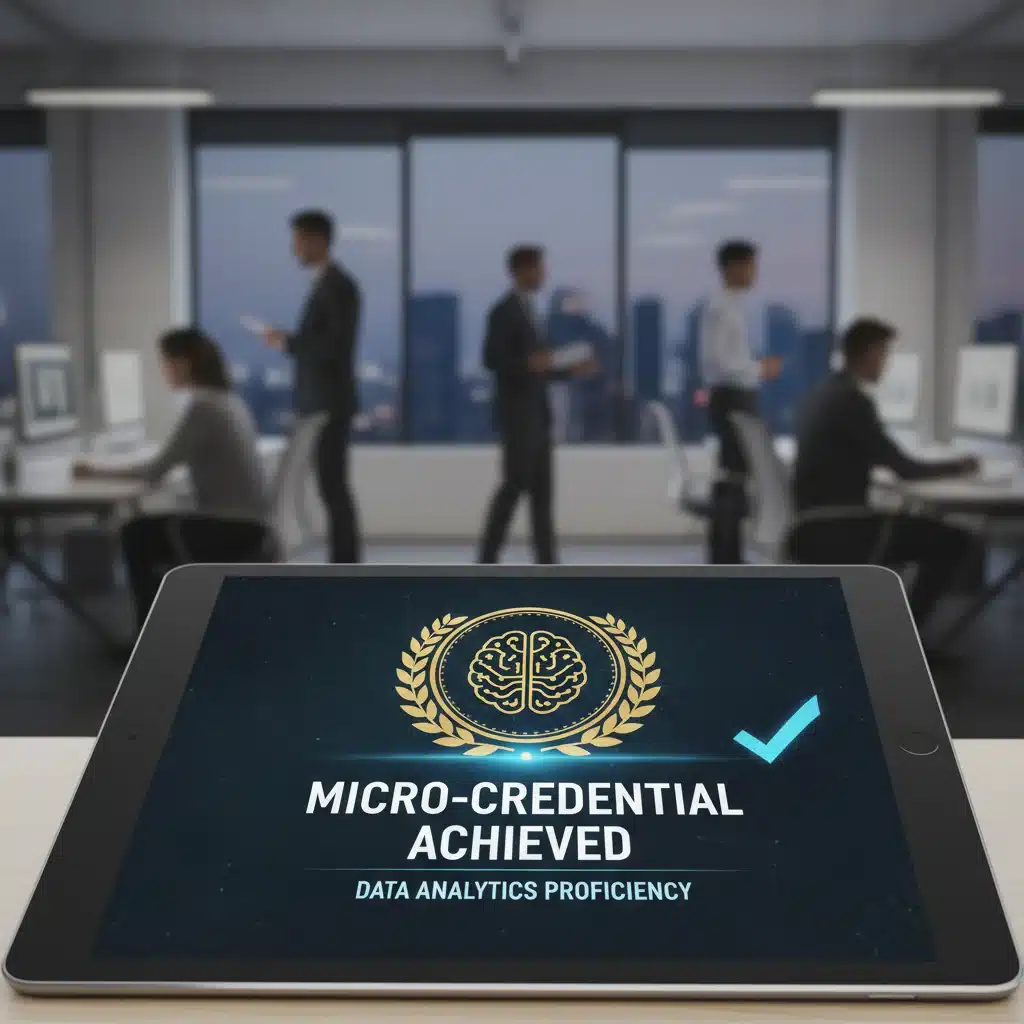
Organizations are increasingly leveraging micro-credentials for internal talent development. Instead of sending employees to lengthy, generic training programs, companies can identify specific skill gaps within their workforce and provide targeted micro-credential pathways. This approach is more efficient, cost-effective, and ensures that employees gain skills directly applicable to their roles and the company’s strategic goals. It’s a win-win for both employee micro-credentials career advancement and organizational agility.
6. Entrepreneurship and Freelancing
For entrepreneurs and freelancers, micro-credentials can be invaluable. They allow individuals to quickly acquire skills needed to launch and grow a business, such as digital marketing, financial management for small businesses, web development, or content creation. This empowers them to wear multiple hats effectively and respond to market demands with agility.
Strategies for Leveraging Micro-Credentials for Career Advancement
To effectively harness the power of micro-credentials for your career advancement in 2026, consider the following strategies:
1. Identify Your Skill Gaps and Career Goals
Begin by conducting a thorough self-assessment. What skills do you currently possess? What skills are in high demand in your desired industry or role? What are your long-term career aspirations? Use job descriptions for your target roles to identify specific competencies required. Tools like LinkedIn Learning, Coursera, and industry reports can help you pinpoint critical skill gaps. This foundational step is crucial for strategic micro-credentials career advancement.
2. Research Reputable Providers
Not all micro-credentials are created equal. Look for providers that are recognized by employers, industry associations, or academic institutions. Platforms like Coursera, edX, Udacity, and Google Career Certificates offer programs developed in partnership with universities and leading companies. Verify that the credentials are verifiable and have a clear learning outcome.
3. Focus on Practical, Applicable Skills
While theoretical knowledge is important, prioritize micro-credentials that emphasize practical application and hands-on experience. Programs that include projects, case studies, or simulations will provide you with tangible evidence of your newly acquired skills, making you more attractive to potential employers.
4. Stack and Specialize
Consider how individual micro-credentials can ‘stack’ to build a more robust skill set. For example, a series of micro-credentials in data analysis, machine learning foundations, and ethical AI could lead to a specialization in responsible AI development. This strategic stacking demonstrates a deeper commitment to a particular field and enhances your overall value for micro-credentials career advancement.
5. Showcase Your Credentials Effectively
Once you earn a micro-credential, don’t keep it a secret! Update your LinkedIn profile, professional website, and resume to prominently display your new certifications. Many digital badges can be easily shared and verified, providing concrete evidence of your skills. During interviews, be prepared to discuss how the skills gained from your micro-credentials directly apply to the role.
6. Network with Your New Skills
Engage with professional communities and industry events relevant to your newly acquired skills. This not only helps you stay updated but also opens doors to new opportunities and collaborations. Your micro-credentials can serve as excellent conversation starters and demonstrate your proactive approach to professional development.
The Employer’s Perspective: Why Micro-Credentials are a Game-Changer
It’s not just individuals who benefit from micro-credentials; employers are increasingly recognizing their value. In 2026, companies will rely even more heavily on these targeted certifications for several reasons:
- Faster Hiring Cycles: Micro-credentials provide clear, verifiable evidence of specific skills, allowing employers to quickly identify qualified candidates without relying solely on traditional degree requirements. This can significantly shorten the hiring process.
- Reduced Recruitment Costs: By focusing on candidates with relevant micro-credentials, companies can reduce the time and resources spent on sifting through unqualified applications.
- Targeted Talent Development: Organizations can implement internal micro-credential programs to address specific skill gaps within their existing workforce, fostering a culture of continuous learning and reducing the need for external hiring. This is crucial for maintaining a competitive edge and ensuring micro-credentials career advancement for their employees.
- Increased Employee Retention and Engagement: Investing in micro-credentialing opportunities for employees demonstrates a commitment to their growth and development, leading to higher job satisfaction and retention rates.
- Agility and Innovation: A workforce that is continuously upskilling through micro-credentials is more agile and better equipped to adapt to new technologies and market demands, driving innovation within the organization.
- Data-Driven Skill Management: Many micro-credential platforms offer analytics that allow organizations to track skill development across their workforce, providing valuable insights for strategic talent planning.

Challenges and Considerations
While the benefits of micro-credentials are undeniable, there are some challenges and considerations to keep in mind:
- Quality Control and Standardization: The proliferation of micro-credentials means that quality can vary. It’s crucial for learners and employers to discern reputable providers and programs. Industry standards and accreditation bodies are working to address this, but vigilance is still required.
- Recognition and Acceptance: While growing, the widespread acceptance of micro-credentials by all employers is still an ongoing process. Some traditional industries or organizations may still prioritize conventional degrees. However, this trend is rapidly shifting, especially in tech-forward sectors.
- Over-Credentialing: There’s a risk of accumulating too many disparate micro-credentials without a clear strategic direction. It’s important to focus on credentials that align with a coherent career path rather than collecting them indiscriminately.
- Maintaining Relevance: Just as skills can become outdated, so too can some micro-credentials. Continuous learning means regularly assessing the relevance of your skills and pursuing new credentials as needed.
The Long-Term Impact on Career Trajectories
Looking beyond 2026, micro-credentials are not just a temporary trend; they represent a fundamental shift in how we approach education and career development. They are democratizing access to high-quality learning, empowering individuals to take ownership of their professional growth, and creating a more skilled, adaptable global workforce. The traditional linear career path is giving way to a more dynamic, portfolio-based approach, where a collection of diverse skills and experiences, often certified by micro-credentials, defines one’s professional identity.
For individuals, this means greater agency over their career trajectories. They can customize their learning journey, respond quickly to market demands, and build a unique skill profile that sets them apart. For employers, it means access to a more agile and specialized talent pool, capable of driving innovation and navigating complex challenges.
The synergy between traditional degrees and micro-credentials will also become more pronounced. Universities are increasingly offering micro-credential programs, either standalone or as part of larger degree pathways, recognizing the demand for targeted, industry-relevant skills. This hybrid approach offers the best of both worlds: the foundational knowledge of a degree combined with the practical, up-to-date skills provided by micro-credentials.
Conclusion: Embrace the Future with Micro-Credentials
The future of work in 2026 and beyond is one of continuous evolution. To thrive in this environment, professionals must embrace lifelong learning and strategically acquire the skills that matter most. Micro-credentials career advancement offers an unparalleled pathway to achieving this. By providing targeted, flexible, and verifiable skill development, they empower individuals to stay relevant, enhance their employability, and unlock new opportunities.
Whether you’re looking to upskill in your current role, pivot to a new industry, or simply stay ahead of the curve, integrating micro-credentials into your learning strategy is no longer an option but a strategic imperative. Start by assessing your goals, researching reputable programs, and actively showcasing your achievements. The journey to sustained career advancement in the coming years will undoubtedly be paved with these powerful, bite-sized certifications.
Embrace the revolution in learning, and position yourself for unparalleled success in the dynamic professional landscape of 2026. Your future career is waiting, and micro-credentials are your key to unlocking its full potential.