Congress Debates New Privacy Legislation: Data Protection in 2026
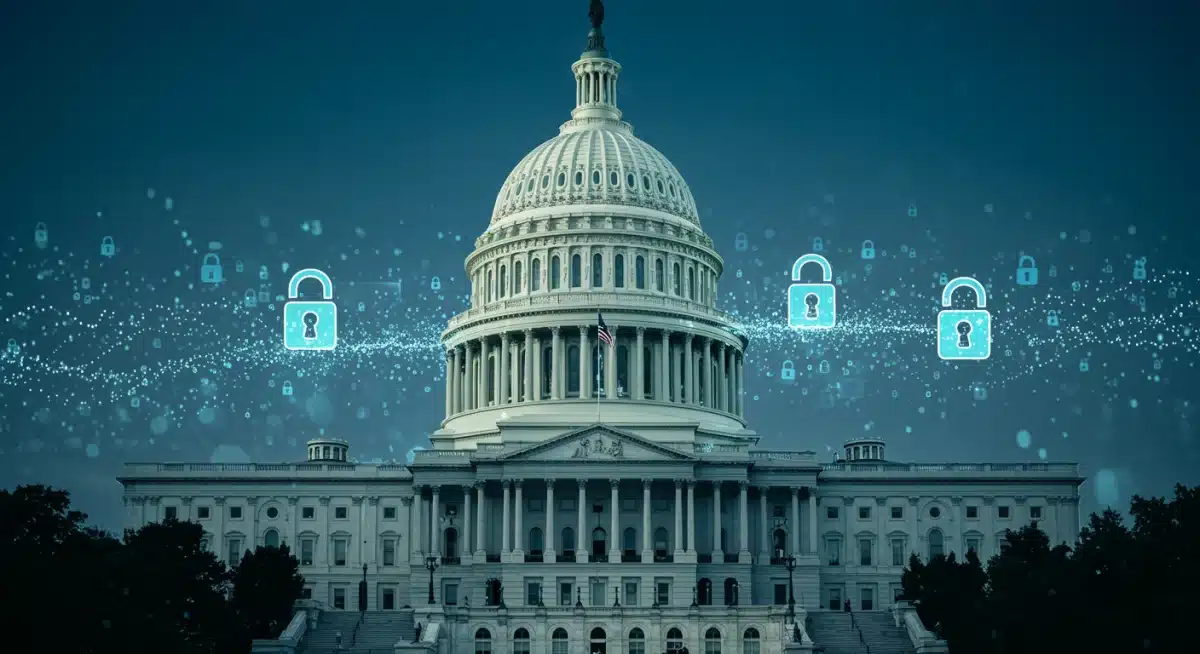
The ongoing congressional debates in 2026 are focused on establishing comprehensive new privacy legislation to safeguard consumer data, addressing the evolving digital landscape and enhancing individual control over personal information.
In an increasingly digital world, the protection of personal data has become a paramount concern for consumers across the United States. As we move further into 2026, the discussion surrounding new privacy legislation in Congress is reaching a critical juncture. These debates aim to craft comprehensive laws that will redefine how companies handle your personal information, from browsing habits to financial transactions. Understanding these proposed changes is crucial for every American, as they will undoubtedly impact your daily digital life and your fundamental rights to privacy.
The Current Landscape of Data Privacy in 2026
Before delving into the specifics of the proposed new privacy legislation, it’s essential to grasp the existing data privacy framework in the United States as of 2026. Unlike the European Union’s GDPR, the U.S. has historically adopted a sector-specific approach, leading to a patchwork of laws that often leave gaps in consumer protection. This fragmented system has proven challenging to navigate for both businesses and individuals, creating inconsistencies in how data is managed and secured across different industries.
While some states, like California with its CCPA and CPRA, have pioneered more robust privacy regulations, a unified federal standard remains elusive. This lack of a cohesive national strategy means that a consumer’s data rights can vary significantly depending on their location and the type of company they interact with. The current situation highlights the urgent need for a more streamlined and comprehensive approach to data protection that can adapt to rapid technological advancements.
Challenges with Existing Regulations
- Inconsistent Enforcement: Varying state laws lead to uneven application of privacy standards.
- Sector-Specific Gaps: Certain industries lack dedicated data protection oversight, leaving consumer data vulnerable.
- Rapid Technological Evolution: Existing laws struggle to keep pace with AI, IoT, and advanced data analytics.
- Consumer Confusion: The complex legal landscape makes it difficult for individuals to understand and exercise their rights.
The current environment underscores why Congress is actively pursuing new privacy legislation. The aim is to move beyond the current piecemeal approach, establishing a clear, enforceable federal standard that protects all Americans equally. This shift is not just about compliance for businesses; it’s about empowering individuals in an increasingly data-driven world.
Key Provisions Expected in New Privacy Legislation
The ongoing congressional debates suggest several key provisions are likely to form the bedrock of any new privacy legislation enacted in 2026. These provisions aim to grant consumers greater control over their personal data while imposing clearer responsibilities on companies that collect and process it. The discussions are complex, balancing innovation and economic growth with fundamental privacy rights, ensuring that the final legislation is both effective and sustainable.
One of the most anticipated elements is the establishment of a universal right for consumers to access, correct, and delete their personal data held by companies. This mirrors rights found in international frameworks and would be a significant step forward for data autonomy in the U.S. Furthermore, robust data minimization principles are being considered, requiring companies to collect only the data strictly necessary for their stated purposes, rather than hoarding vast amounts of information.
Core Consumer Rights Under Discussion
- Right to Access: Consumers can request copies of their personal data.
- Right to Correction: Ability to rectify inaccurate personal information.
- Right to Deletion: Power to request the erasure of personal data under certain conditions.
- Right to Opt-Out: Freedom to prevent the sale or sharing of personal data with third parties.
Beyond individual rights, the new privacy legislation is also expected to mandate clearer data breach notification requirements. This aims to ensure that consumers are promptly informed when their data has been compromised, allowing them to take necessary protective measures. Companies may also face stricter accountability measures, including regular privacy impact assessments and the designation of data protection officers, to ensure ongoing compliance with the new regulations.
Impact on Businesses: Compliance and Innovation
The introduction of comprehensive new privacy legislation will undoubtedly have a profound impact on businesses operating within the United States. While the primary goal is consumer protection, lawmakers are also keenly aware of the need to foster innovation and economic growth. The challenge lies in striking a balance that ensures robust data privacy without stifling technological advancement or overburdening small and medium-sized enterprises (SMEs).
Companies will need to invest significantly in updating their data handling practices, security protocols, and internal policies to achieve compliance. This includes mapping data flows, implementing consent management platforms, and training employees on the new regulatory requirements. For many organizations, particularly those accustomed to less stringent oversight, this will necessitate a fundamental shift in their approach to data.
Key Business Compliance Areas
- Data Mapping and Inventory: Understanding what data is collected, where it’s stored, and how it’s used.
- Consent Management: Implementing clear, granular mechanisms for obtaining and managing user consent.
- Enhanced Security Measures: Strengthening cybersecurity to prevent data breaches.
- Vendor Management: Ensuring third-party partners also comply with new data protection standards.
Despite the initial compliance costs, many industry leaders view new privacy legislation as an opportunity to build greater consumer trust, which can translate into long-term business benefits. Companies that prioritize data privacy and transparency may gain a competitive advantage, attracting consumers who are increasingly discerning about how their personal information is handled. Lawmakers are exploring phased implementation periods and support mechanisms for SMEs to help ease the transition.
Enforcement and Penalties for Non-Compliance
A crucial aspect of any effective new privacy legislation in 2026 will be the mechanisms for enforcement and the penalties for non-compliance. Without clear and substantial consequences, even the most well-intentioned laws risk becoming mere suggestions. Congressional debates are focusing on establishing a robust enforcement framework that includes both federal and potentially state-level oversight, ensuring that businesses adhere to the new standards.
It is widely expected that a federal agency, likely the Federal Trade Commission (FTC) or a newly created body, will be granted significant authority to investigate violations, issue fines, and compel corrective actions. The penalties for non-compliance are anticipated to be substantial, potentially including significant monetary fines based on a percentage of a company’s annual revenue, similar to models seen in other global privacy regulations. This aims to create a strong deterrent against negligent or intentional breaches of privacy.

Furthermore, the legislation may include provisions for private rights of action, allowing individuals to sue companies directly for privacy violations. This would empower consumers to seek redress when their rights are infringed upon, adding another layer of accountability. The discussions also involve how to ensure consistent enforcement across different states and industries, avoiding the fragmented approach that has characterized previous privacy efforts.
The goal of these enforcement provisions is not solely punitive but also preventative. By establishing clear guidelines and significant repercussions for failure to comply, the new privacy legislation seeks to incentivize businesses to adopt a privacy-by-design approach, integrating data protection considerations into all stages of product and service development from the outset. This proactive stance is seen as essential for building a more secure digital ecosystem for everyone.
The Role of Technology in Data Protection in 2026
As Congress debates new privacy legislation, the role of technology itself in both creating and solving data protection challenges is a central theme. In 2026, advancements in artificial intelligence (AI), machine learning, and blockchain offer both new avenues for data collection and sophisticated tools for enhancing privacy and security. The legislation aims to harness these technological capabilities while mitigating their potential risks.
Privacy-enhancing technologies (PETs) are gaining significant attention. These tools, which include techniques like differential privacy, homomorphic encryption, and secure multi-party computation, allow for data analysis and collaboration without exposing raw personal information. Lawmakers are exploring ways to encourage the adoption and development of such technologies, potentially through incentives or mandated use in certain scenarios, to bolster the effectiveness of the new laws.
Emerging Technologies and Privacy Solutions
- Differential Privacy: Adds noise to datasets to protect individual identities while allowing for statistical analysis.
- Homomorphic Encryption: Enables computation on encrypted data without decrypting it, maintaining privacy throughout.
- Blockchain for Data Provenance: Provides immutable records of data transactions, enhancing transparency and accountability.
- AI for Anomaly Detection: Utilizes AI to identify unusual data access patterns, signaling potential breaches.
However, technology also presents new privacy challenges. The proliferation of IoT devices, advanced facial recognition systems, and predictive analytics powered by AI raises complex questions about consent, surveillance, and algorithmic bias. The new privacy legislation is expected to address these issues by setting boundaries on how these technologies can be used, ensuring they align with ethical considerations and fundamental human rights. This involves mandating transparency in AI systems and requiring impact assessments for high-risk applications of emerging technologies.
What Consumers Can Do to Prepare for New Privacy Legislation
While Congress continues to debate and shape the new privacy legislation, consumers are not powerless. There are proactive steps individuals can take now, and in anticipation of the new laws in 2026, to better protect their personal data and understand their evolving rights. Being informed and taking action can significantly enhance your digital security and privacy posture, regardless of the final legislative outcome.
One of the most immediate actions is to review and update your privacy settings on all online platforms, social media, and mobile applications. Many services offer granular controls over what data they collect and share, but these settings are often buried deep within menus. Taking the time to customize these preferences can significantly reduce your digital footprint. Additionally, consider using privacy-focused browsers and search engines that prioritize user data protection.
Actionable Steps for Consumers
- Audit Your Digital Footprint: Regularly review what personal information is publicly available about you online.
- Strengthen Passwords and Use MFA: Employ strong, unique passwords and multi-factor authentication for all accounts.
- Understand Terms of Service: Read privacy policies (or at least key summaries) to know how your data is being used.
- Exercise Your Rights: Don’t hesitate to request data access or deletion from companies, even under existing laws.
Staying informed about the congressional debates and the eventual passage of new privacy legislation is also crucial. Follow reputable news sources, engage with consumer advocacy groups, and understand the specifics of the laws as they are enacted. This knowledge will empower you to exercise your rights effectively once the new framework is in place. Remember, your data is valuable, and taking proactive steps is the best way to safeguard it in the digital age.
The Future of Data Protection: Beyond 2026
Even as Congress moves towards establishing new privacy legislation in 2026, the discussion around data protection is far from over. The digital landscape is constantly evolving, with new technologies and data uses emerging at an unprecedented pace. Therefore, any legislative framework must be designed with adaptability and future-proofing in mind, ensuring it can remain relevant and effective for years to come.
Looking beyond 2026, we can anticipate ongoing debates about the global interoperability of privacy laws. As data flows across international borders, harmonizing regulations will become increasingly important to ensure consistent protection for individuals and clear guidelines for multinational corporations. The U.S. legislation could serve as a model or require further alignment with international standards, impacting global data governance.
Furthermore, the ethical implications of emerging technologies, particularly in areas like brain-computer interfaces, advanced biometrics, and pervasive surveillance, will continue to challenge existing privacy paradigms. Future legislative efforts will likely need to address these cutting-edge issues, ensuring that technological progress does not come at the expense of fundamental human rights and individual autonomy.
The journey of data protection is continuous. The new privacy legislation of 2026 will represent a significant milestone, providing a much-needed federal baseline. However, it will also set the stage for ongoing discussions, refinements, and expansions as society grapples with the ever-changing relationship between technology, data, and individual privacy. Vigilance, adaptability, and continuous public discourse will be essential to navigate this evolving landscape successfully.
| Key Aspect | Brief Description |
|---|---|
| Current US Privacy | Fragmented, sector-specific laws with state-level variations like CCPA. |
| Expected Provisions | Universal rights to access, correct, delete data; data minimization, breach notifications. |
| Business Impact | Increased compliance costs, need for data mapping, enhanced security, potential for consumer trust. |
| Consumer Action | Review privacy settings, use strong passwords, stay informed about new laws. |
Frequently Asked Questions About New Privacy Legislation
The primary goal is to establish a comprehensive federal standard for data protection, moving away from the current fragmented approach. This aims to grant consumers greater control over their personal data, enhance transparency, and impose stricter accountability on companies regarding data collection, usage, and security practices across all industries.
Consumers are expected to gain universal rights, including the ability to access, correct, and request the deletion of their personal data. Additionally, there will likely be enhanced rights to opt-out of data sales and sharing, alongside clearer notifications in the event of a data breach, giving you more control over your digital footprint.
Businesses will face significant challenges, including the need to overhaul their data handling practices, invest in new compliance technologies, and train staff. They will also need to conduct thorough data mapping and implement robust consent management systems. While costly, it is also an opportunity to build greater consumer trust and streamline operations.
It is highly anticipated that a federal agency, possibly an expanded Federal Trade Commission (FTC) or a new entity, will be granted significant enforcement powers. This agency would be responsible for investigating violations, imposing substantial fines, and ensuring consistent application of the new privacy standards across the entire United States.
Even before the new laws are enacted, you can enhance your privacy by reviewing and adjusting privacy settings on all online accounts, using strong, unique passwords with multi-factor authentication, and being mindful of the data you share. Staying informed about legislative developments will also empower you to exercise your rights effectively once the laws are in place.
Conclusion
The ongoing congressional debates surrounding new privacy legislation in 2026 mark a pivotal moment for data protection in the United States. This legislative push aims to rectify the inconsistencies of past policies, establishing a unified federal framework that empowers consumers and holds businesses accountable. While the journey towards a comprehensive law is complex, its successful implementation promises a more secure and transparent digital future for all Americans. Staying informed and proactively managing your digital footprint will be key to navigating this evolving landscape and safeguarding your personal information.