Cyberattack Surge: 20% Increase in Data Breaches Exposing 50 Million US Records in Q4 2024
A new report reveals a significant cyberattack surge in Q4 2024, with a 20% increase in data breaches compromising over 50 million US records, underscoring critical vulnerabilities in current digital security infrastructures.
The digital landscape is constantly evolving, and unfortunately, so are the threats within it. A recent report has unveiled a disturbing cyberattack surge in Q4 2024, detailing a 20% increase in data breaches that exposed a staggering 50 million US records. This alarming trend necessitates a deeper understanding of the forces at play and the proactive measures we must adopt.
Understanding the Q4 2024 Cyberattack Surge
The final quarter of 2024 witnessed an unprecedented escalation in cybercriminal activity across the United States. This period, often characterized by increased online commerce and holiday-related digital interactions, proved to be fertile ground for malicious actors. The reported 20% increase isn’t just a statistic; it represents a significant broadening of the attack surface and a more sophisticated approach by threat groups.
This surge can be attributed to several converging factors, from the exploitation of newly discovered vulnerabilities to the refinement of social engineering tactics. Organizations, both large and small, found themselves unprepared for the scale and intensity of these attacks, leading to widespread compromise of sensitive information. The implications extend far beyond immediate financial losses, impacting consumer trust and national security.
Key Drivers Behind the Escalation
- Sophisticated Ransomware Variants: New strains of ransomware emerged, capable of evading traditional detection methods and encrypting data at an accelerated pace.
- AI-Enhanced Phishing Campaigns: Attackers leveraged artificial intelligence to craft highly personalized and convincing phishing emails, increasing success rates.
- Supply Chain Attacks: Compromising a single vendor allowed attackers to gain access to multiple downstream organizations, amplifying their reach.
- Exploitation of Zero-Day Vulnerabilities: Previously unknown software flaws were discovered and rapidly exploited before patches could be deployed.
The combination of these factors created a perfect storm, allowing cybercriminals to penetrate defenses with greater ease and efficiency. Understanding these drivers is the first step in formulating effective counter-strategies.
In conclusion, the Q4 2024 cyberattack surge was a complex phenomenon driven by a confluence of technological advancements, human vulnerabilities, and strategic targeting. Recognizing these underlying causes is crucial for both individuals and organizations to begin fortifying their digital perimeters against future assaults.
The Staggering Impact: 50 Million US Records Exposed
The sheer volume of exposed records – over 50 million in the US alone – paints a grim picture of the cyber threat landscape. This isn’t merely data; it represents personal identities, financial details, health information, and proprietary corporate intelligence. The exposure of such a massive dataset has profound and lasting consequences for individuals and the economy.
For individuals, data exposure can lead to identity theft, financial fraud, and severe personal distress. Stolen data can be used to open fraudulent accounts, make unauthorized purchases, or even compromise existing financial instruments. The long-term implications often require years of vigilance and remedial actions to mitigate the damage, costing consumers valuable time and resources.
Categories of Compromised Data
The types of records exposed in these breaches were diverse, reflecting the broad targeting strategies of cybercriminals:
- Personally Identifiable Information (PII): Names, addresses, dates of birth, Social Security Numbers, and driver’s license numbers.
- Financial Data: Credit card numbers, bank account details, and investment information.
- Healthcare Records: Patient histories, diagnoses, treatment plans, and insurance information.
- Login Credentials: Usernames and passwords for various online services, often leading to subsequent account takeovers.
The widespread compromise of these categories of data underscores the comprehensive nature of the attacks. It also highlights the interconnectedness of our digital lives, where a breach in one sector can have ripple effects across many others. Organizations must prioritize the protection of all sensitive data, recognizing its immense value to malicious actors.
The exposure of 50 million US records serves as a stark reminder of the tangible impact of cyberattacks. It’s a call to action for improved security practices, not just at an organizational level but also for individual digital hygiene, to prevent further such widespread compromises.
Industry Sectors Most Affected by Data Breaches
While no sector is entirely immune to cyber threats, the Q4 2024 report highlighted specific industries that bore the brunt of the cyberattack surge. These sectors often handle vast amounts of sensitive data, making them prime targets for cybercriminals seeking maximum impact and financial gain. Understanding which industries are most vulnerable can inform targeted defense strategies.
The financial services sector, healthcare, and technology companies consistently appear on lists of most-attacked industries. However, Q4 2024 also saw a significant uptick in breaches affecting government agencies and educational institutions. These sectors, while perhaps not traditionally seen as high-value financial targets, possess invaluable personal data and critical infrastructure, making them attractive to state-sponsored actors and financially motivated groups alike.
Vulnerable Industries and Their Challenges
- Healthcare: Holds highly sensitive patient data, often operates with legacy IT systems, and faces frequent ransomware attacks that disrupt critical services.
- Financial Services: Manages vast sums of money and personal financial information, making it a constant target for direct financial fraud and account takeovers.
- Government: Possesses national security secrets and extensive citizen data, attracting sophisticated state-sponsored attacks and espionage attempts.
- Technology: Develops critical software and hardware, making it a target for supply chain attacks that can propagate malicious code through widely used products.
The report indicated that the sophistication of attacks against these sectors increased, moving beyond simple phishing to more advanced persistent threats (APTs) and zero-day exploits. This requires a shift from reactive defense to proactive threat intelligence and robust incident response plans.
Ultimately, the concentration of breaches within certain industries underscores the need for sector-specific security frameworks and collaborative intelligence sharing. Protecting these critical sectors is paramount for maintaining economic stability and public trust in our digital infrastructure.
The Evolving Tactics of Cybercriminals
The cyberattack surge in Q4 2024 wasn’t just about increased volume; it also showcased a marked evolution in the tactics employed by malicious actors. Cybercriminals are constantly refining their methodologies, leveraging emerging technologies and exploiting human psychology to bypass even the most robust security measures. This adaptability makes them a formidable challenge for cybersecurity professionals.
One notable shift was the increased use of artificial intelligence and machine learning by attackers. These technologies were deployed to automate reconnaissance, generate highly convincing deepfake phishing content, and even optimize malware delivery. This allowed for more efficient and scalable attacks, making it harder for human defenders to keep pace.
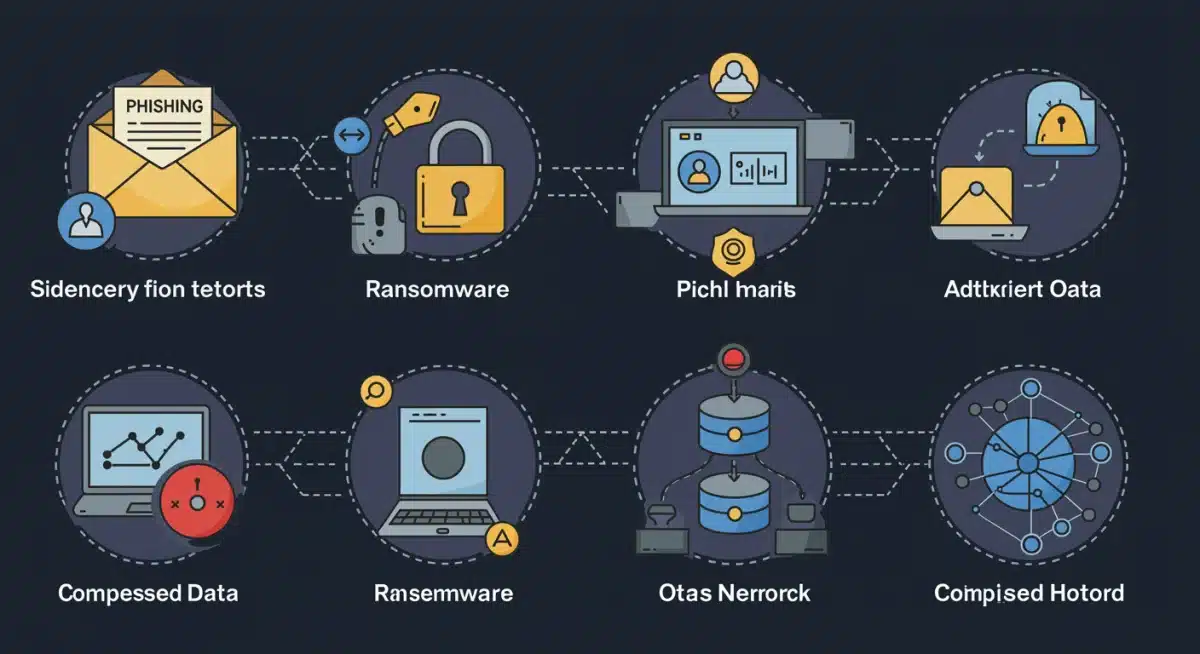
Advanced Attack Methodologies
- AI-Powered Social Engineering: Using AI to analyze targets’ online presence and craft hyper-personalized phishing emails and messages, increasing their believability.
- Double Extortion Ransomware: Beyond encrypting data, attackers exfiltrate sensitive information and threaten to publish it if the ransom isn’t paid, adding another layer of pressure.
- Living Off the Land (LotL) Attacks: Utilizing legitimate system tools and processes already present in a network to carry out attacks, making them harder to detect as malicious activity.
- Vishing and Smishing Campaigns: Voice phishing (vishing) and SMS phishing (smishing) saw a resurgence, often combined with AI-generated voice cloning to impersonate trusted individuals.
These sophisticated tactics highlight the need for continuous security education and advanced threat detection systems. Organizations can no longer rely solely on perimeter defenses; they must adopt a multi-layered approach that includes behavioral analytics and endpoint detection and response (EDR) solutions.
The evolving tactics of cybercriminals demand a proportional evolution in defense strategies. Staying informed about these new methods is critical for individuals and organizations to preemptively protect themselves against the next wave of attacks.
Protecting Your Data: Essential Cybersecurity Measures
In the wake of the cyberattack surge in Q4 2024, implementing robust cybersecurity measures is no longer optional; it’s a fundamental necessity for everyone. Both individuals and organizations must adopt a proactive and layered approach to protect sensitive data from increasingly sophisticated threats. Complacency is the biggest vulnerability in today’s digital world.
Effective cybersecurity is not solely about technology; it also heavily relies on human awareness and adherence to best practices. Even the most advanced firewalls and intrusion detection systems can be bypassed if an employee falls victim to a phishing scam or uses weak passwords. Therefore, a comprehensive strategy must address both technical safeguards and human factors.
Key Cybersecurity Best Practices
To safeguard against future breaches, consider these essential measures:
- Multi-Factor Authentication (MFA): Enable MFA on all accounts where available. This adds an extra layer of security, making it significantly harder for unauthorized users to gain access even if they have your password.
- Strong, Unique Passwords: Use complex, unique passwords for every online account. Password managers can help generate and store these securely.
- Regular Software Updates: Keep all operating systems, applications, and antivirus software up to date. Updates often include critical security patches for newly discovered vulnerabilities.
- Employee Training and Awareness: For organizations, regular training on phishing, social engineering, and data handling best practices is crucial to reduce human error.
- Data Encryption: Encrypt sensitive data both in transit and at rest. This ensures that even if data is breached, it remains unreadable to unauthorized parties.
- Regular Backups: Implement a robust backup strategy, storing critical data offline or in secure, isolated environments to recover from ransomware attacks.
Implementing these measures can significantly reduce the risk of falling victim to a data breach. Cybersecurity is an ongoing process, requiring continuous vigilance and adaptation to new threats. By prioritizing these practices, we can collectively build a more resilient digital environment.
The Road Ahead: Future of Cybersecurity and Policy Response
The lessons learned from the cyberattack surge in Q4 2024 are critical for shaping the future of cybersecurity and policy responses. The scale and sophistication of recent breaches demand a coordinated effort from governments, industries, and individuals to build a more resilient and secure digital infrastructure. This isn’t just about reacting to past incidents but proactively preparing for future threats.
Governments are increasingly recognizing the need for stronger regulations and international cooperation to combat cybercrime. Discussions around data sovereignty, cross-border data sharing agreements for law enforcement, and standardized security frameworks are gaining momentum. The goal is to create a global environment where cybercriminals find fewer safe havens and face more stringent penalties.
Anticipated Cybersecurity Trends and Policy Shifts
- Enhanced Regulatory Frameworks: Expect more stringent data privacy laws and cybersecurity mandates, similar to GDPR and CCPA, to emerge globally and within the US.
- Increased Public-Private Partnerships: Collaboration between government agencies and private sector cybersecurity firms will deepen to share threat intelligence and develop joint defense strategies.
- Focus on AI in Defense: While AI is used by attackers, it will also be a crucial tool for defense, enabling faster threat detection, automated response, and predictive analytics.
- Zero Trust Architecture Adoption: Organizations will increasingly move towards ‘never trust, always verify’ models, where every user and device is authenticated and authorized, regardless of their location.
- Cyber Resilience over Prevention: Acknowledging that breaches are inevitable, emphasis will shift towards rapid detection, containment, and recovery to minimize impact.
These trends suggest a future where cybersecurity is integrated into every aspect of digital design and operation, rather than being an afterthought. Policy responses will aim to foster innovation in security technologies while holding organizations accountable for data protection.
The road ahead for cybersecurity is challenging but also filled with opportunities for innovation and collaboration. By learning from the Q4 2024 surge, we can collectively work towards a more secure and trustworthy digital future.
| Key Aspect | Brief Description |
|---|---|
| Cyberattack Surge | Q4 2024 saw a 20% increase in data breaches, indicating heightened threat activity. |
| Exposed Records | Over 50 million US records were compromised, including PII, financial, and health data. |
| Evolving Tactics | Cybercriminals used AI-powered phishing, double extortion ransomware, and LotL attacks. |
| Protection Measures | MFA, strong passwords, regular updates, and employee training are crucial for defense. |
Frequently Asked Questions About Cyberattacks
The surge was primarily driven by the deployment of more sophisticated ransomware variants, AI-enhanced phishing campaigns, an increase in supply chain attacks, and the rapid exploitation of zero-day vulnerabilities by malicious actors during a period of heightened online activity.
The exposed records included a wide range of sensitive information such as Personally Identifiable Information (PII) like names and Social Security Numbers, financial data, healthcare records, and login credentials, impacting millions of US citizens.
While various sectors were targeted, financial services, healthcare, technology companies, government agencies, and educational institutions experienced the highest number of significant data breaches due to the sensitive nature of the data they manage.
Individuals should prioritize using strong, unique passwords with a password manager, enabling Multi-Factor Authentication (MFA), regularly updating software, being wary of phishing attempts, and backing up important data to secure locations.
Governments and organizations are enhancing regulatory frameworks, fostering public-private partnerships for threat intelligence, integrating AI into defense strategies, adopting Zero Trust architectures, and focusing on cyber resilience to minimize breach impacts.
Conclusion
The cyberattack surge in Q4 2024 served as a definitive wake-up call, highlighting the urgent and evolving nature of digital threats. With a 20% increase in data breaches exposing over 50 million US records, the imperative for robust cybersecurity measures has never been clearer. This period underscored the sophistication of modern cybercriminals and the critical vulnerabilities that persist across various sectors. Moving forward, a multi-faceted approach involving advanced technological defenses, continuous user education, strengthened regulatory policies, and collaborative intelligence sharing will be essential. By adopting proactive strategies and fostering a culture of cybersecurity awareness, both individuals and organizations can collectively work towards a more secure and resilient digital future, safeguarding sensitive information against an increasingly complex threat landscape.