5 Critical Skills US High School Graduates Need for 2025 Job Market
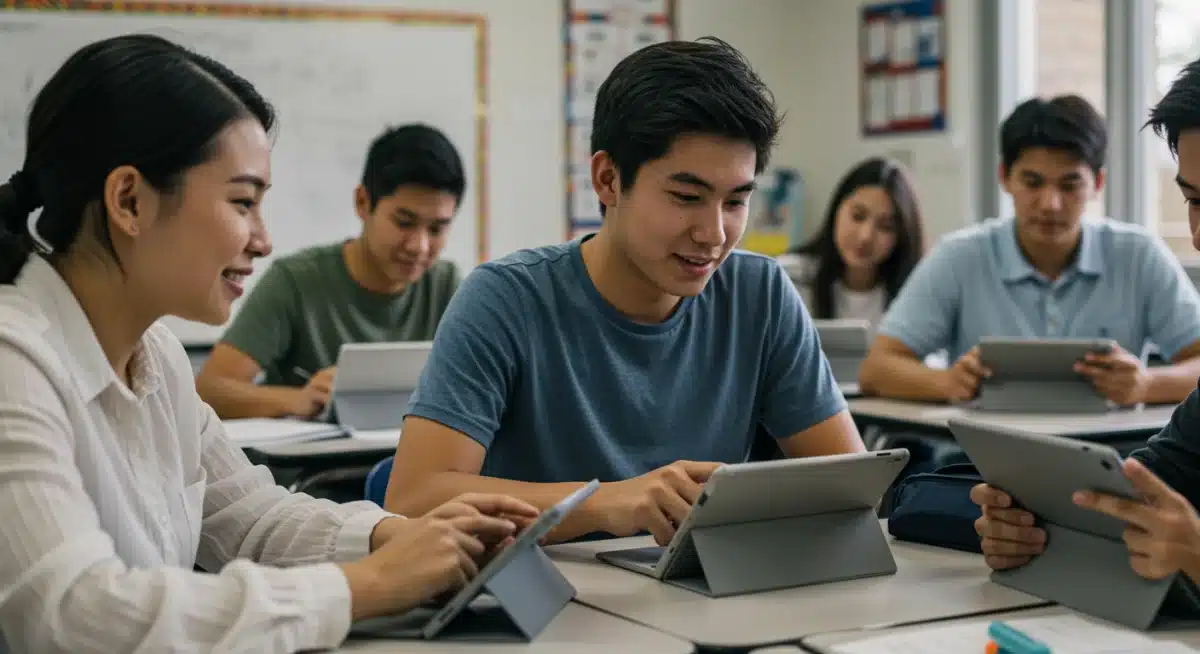
To thrive in the dynamic 2025 job market, US high school graduates must develop critical skills beyond traditional academics, focusing on adaptability, digital literacy, and complex problem-solving.
The landscape for US high school graduates entering the job market by 2025 is shifting dramatically, demanding more than just traditional academic prowess. Understanding the 5 Critical Skills US High School Graduates Need for the 2025 Job Market: Beyond Traditional Academics is no longer a suggestion but a necessity for success in an increasingly complex and competitive world.
Adapting to the Future: The Imperative of Lifelong Learning
The pace of technological advancement and global change means that the skills valued today may be obsolete tomorrow. High school graduates entering the 2025 job market must embrace a mindset of continuous learning, viewing education not as a finite period but as a lifelong journey. This adaptability is paramount for navigating career transitions and staying relevant in evolving industries.
Gone are the days when a single degree or vocational training guaranteed a career path for life. The modern workforce demands individuals who can quickly acquire new knowledge, unlearn outdated methods, and apply new skills to novel situations. This fluid approach to professional development is a cornerstone of future employability.
Cultivating Curiosity and Self-Direction
- Proactive Skill Acquisition: Graduates need to actively seek out opportunities for new learning, whether through online courses, certifications, or self-study.
- Resourcefulness: The ability to find and utilize relevant information independently is crucial in a data-rich world.
- Growth Mindset: Embracing challenges and viewing failures as learning opportunities fosters resilience and continuous improvement.
Developing this capacity for lifelong learning begins in high school by fostering curiosity and encouraging students to take ownership of their educational journey. Schools can play a vital role by integrating project-based learning and inquiry-driven approaches that stimulate intellectual exploration beyond textbooks.
Ultimately, graduates who understand that learning never truly ends will be best equipped to adapt to the unpredictable demands of the 2025 job market, transforming challenges into opportunities for growth and innovation.
Digital Fluency and Data Literacy: Navigating the Information Age
In an era dominated by technology, digital fluency is no longer an optional skill but a fundamental requirement for virtually every profession. US high school graduates entering the 2025 job market must possess more than just basic computer skills; they need to be proficient in navigating digital environments, understanding data, and leveraging technological tools effectively.
This goes beyond simply knowing how to use software. It involves understanding the underlying principles of digital systems, recognizing potential biases in data, and critically evaluating information sourced from online platforms. Data literacy, in particular, is becoming increasingly important as businesses rely on data-driven decisions.
Essential Digital Competencies
- Cloud Computing Proficiency: Familiarity with cloud-based platforms and collaborative tools is essential for modern workplaces.
- Cybersecurity Awareness: Understanding basic cybersecurity practices to protect personal and organizational data.
- Ethical Digital Citizenship: Responsible and ethical use of technology, including awareness of digital footprint and online etiquette.
Beyond these foundational skills, graduates should also have a basic understanding of how data is collected, analyzed, and interpreted. This includes the ability to identify credible data sources, understand statistical representations, and draw informed conclusions from numerical information. Such skills are critical for roles ranging from marketing to healthcare.
High schools must prioritize integrating comprehensive digital literacy programs that move beyond rote memorization of software functions to teach critical thinking about digital tools and data. This preparation ensures graduates are not just users of technology, but informed and responsible digital citizens.
Critical Thinking and Complex Problem-Solving: Beyond Rote Answers
The 2025 job market will increasingly reward individuals who can think critically and solve complex problems, rather than those who simply recall facts. High school graduates need to demonstrate the ability to analyze situations, identify root causes, develop creative solutions, and evaluate outcomes effectively. This goes far beyond the traditional academic emphasis on finding single correct answers.
Employers are seeking candidates who can approach ambiguous situations with a structured methodology, break down large problems into manageable components, and collaborate to find innovative solutions. These are the skills that differentiate human intelligence from artificial intelligence, which can handle routine tasks but struggles with novel, ill-defined challenges.
Strategies for Enhanced Problem-Solving
- Analytical Reasoning: The ability to evaluate information, arguments, and evidence objectively.
- Creative Solution Generation: Thinking outside the box to devise new and effective approaches to problems.
- Decision-Making Under Uncertainty: Making informed choices even when all information is not available.
High school curricula should therefore emphasize inquiry-based learning, case studies, and real-world projects that require students to apply critical thinking skills. Debates, simulations, and challenges that mimic workplace scenarios can also be invaluable in developing these crucial competencies.
Graduates who master critical thinking and complex problem-solving will not only be more desirable to employers but will also be better equipped to tackle personal and societal challenges in an increasingly intricate world.
Communication and Collaboration: The Cornerstone of Teamwork
Effective communication and strong collaborative skills are indispensable in virtually every professional setting. The 2025 job market demands US high school graduates who can articulate ideas clearly, listen actively, negotiate effectively, and work cohesively within diverse teams. Remote work and global collaboration further amplify the importance of these interpersonal abilities.
Successful collaboration involves more than just sharing tasks; it requires mutual respect, constructive feedback, conflict resolution, and the ability to leverage diverse perspectives to achieve common goals. Both verbal and written communication must be precise and tailored to the audience and context.
Key Collaborative and Communication Elements
- Active Listening: Truly understanding and responding thoughtfully to others’ input.
- Cross-Cultural Communication: Adapting communication styles to interact effectively with people from different backgrounds.
- Team Leadership and Followership: Knowing when to lead, when to support, and how to contribute positively to group dynamics.
High schools can foster these skills through group projects, presentations, and extracurricular activities that require teamwork and public speaking. Learning to provide and receive constructive criticism, manage group conflicts, and present findings persuasively are all vital components of this skill set.
Graduates proficient in communication and collaboration will be valuable assets to any organization, capable of fostering productive environments and driving collective success in an interconnected world.
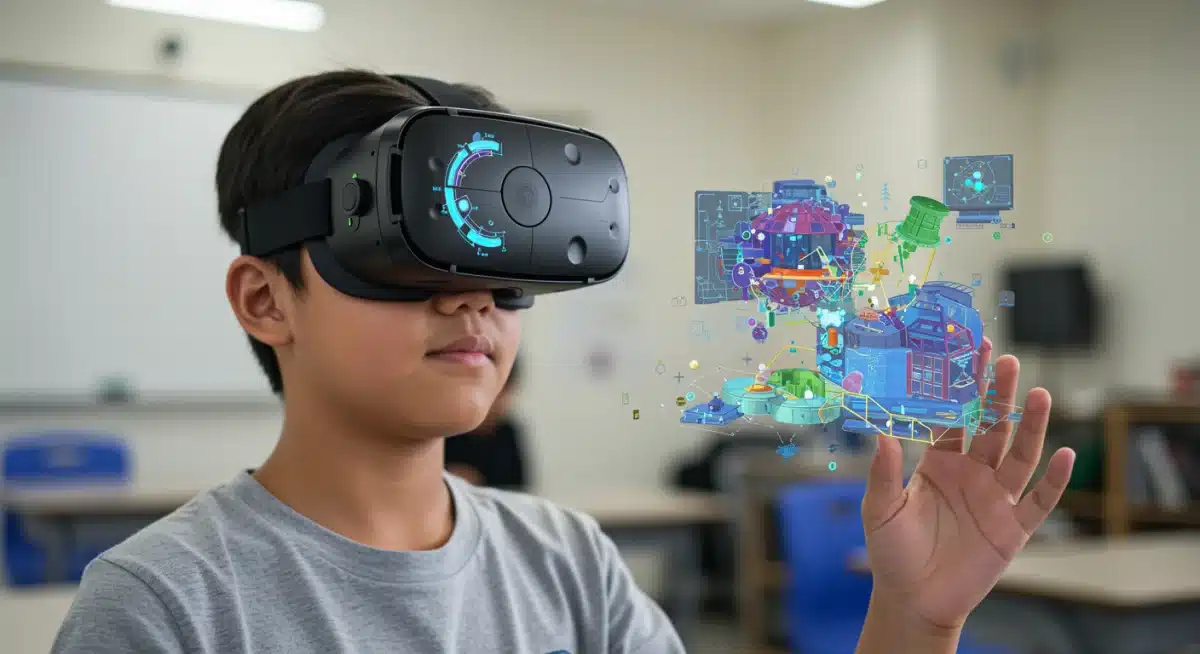
Emotional Intelligence and Resilience: Thriving Under Pressure
Beyond cognitive abilities, emotional intelligence (EQ) and resilience are increasingly recognized as critical for success in the modern workplace. The 2025 job market will value US high school graduates who can understand and manage their own emotions, empathize with others, and navigate stress and setbacks effectively. These soft skills are crucial for maintaining well-being and productivity in demanding environments.
Emotional intelligence encompasses self-awareness, self-regulation, motivation, empathy, and social skills. Resilience, on the other hand, is the capacity to recover quickly from difficulties, adapt to change, and persevere in the face of adversity. Both are vital for personal and professional growth.
Building EQ and Resilience
- Self-Awareness: Understanding one’s own strengths, weaknesses, values, and emotional triggers.
- Empathy: The ability to understand and share the feelings of another.
- Stress Management: Developing healthy coping mechanisms for workplace pressures.
High schools can integrate social-emotional learning (SEL) into their curricula, teaching students self-management techniques, relationship skills, and responsible decision-making. Providing opportunities for students to reflect on their experiences, practice mindfulness, and engage in mentorship can also significantly contribute to their emotional development.
Graduates possessing high emotional intelligence and resilience will be better equipped to handle the stresses of the job market, build stronger professional relationships, and maintain a positive outlook even when faced with challenges, contributing to a more harmonious and productive work environment.
Entrepreneurial Mindset and Adaptability: Innovating for the Future
The final critical skill for US high school graduates entering the 2025 job market is an entrepreneurial mindset combined with a high degree of adaptability. This doesn’t necessarily mean starting a business, but rather approaching problems with innovation, taking initiative, and being comfortable with calculated risks. The ability to pivot quickly in response to new information or changing market conditions is invaluable.
An entrepreneurial mindset encourages individuals to identify opportunities, develop creative solutions, and take ownership of projects. It involves a proactive approach to work, a willingness to challenge the status quo, and a continuous search for improvement. This skill set is particularly relevant in dynamic industries where innovation is key.
Fostering Innovation and Flexibility
- Proactiveness: Taking initiative and seeking out new challenges rather than waiting for instructions.
- Risk Assessment: Understanding and evaluating potential risks and benefits before making decisions.
- Resource Optimization: Making the most of available resources to achieve goals, often under constraints.
High schools can cultivate this mindset through programs that encourage design thinking, business simulations, and community projects where students have to identify needs and propose solutions. Internships and apprenticeships also offer invaluable real-world experience in navigating dynamic professional environments.
Graduates who embody an entrepreneurial spirit and are highly adaptable will not only be more competitive in the job market but will also be better prepared to create their own opportunities, innovate within existing structures, and drive economic growth in an ever-changing economy.
| Key Skill | Brief Description |
|---|---|
| Lifelong Learning | Embracing continuous education and skill acquisition for career adaptability. |
| Digital & Data Literacy | Proficiency in digital tools and critical understanding of data for informed decisions. |
| Critical Thinking | Analyzing complex situations and developing innovative solutions beyond rote answers. |
| Emotional Intelligence | Understanding and managing emotions, demonstrating empathy, and building strong relationships. |
Frequently Asked Questions About Future Job Skills
The 2025 job market is characterized by rapid technological change and increasing complexity. Traditional academic skills, while foundational, often don’t equip graduates with the adaptability, critical thinking, and interpersonal competencies needed to navigate dynamic professional environments and emerging roles. Employers seek abilities beyond rote memorization.
High schools can integrate social-emotional learning (SEL) programs, offering courses or workshops on self-awareness, empathy, and conflict resolution. Encouraging reflection, providing mentorship opportunities, and fostering a supportive school environment where students can practice these skills and learn from setbacks are also crucial.
Digital literacy is essential across all sectors, not just tech. Even in non-tech roles, employees use digital tools for communication, data analysis, and project management. Basic proficiency in cloud platforms, data interpretation, and cybersecurity is becoming a universal expectation, enhancing efficiency and decision-making.
No, an entrepreneurial mindset extends beyond starting a business. It involves creativity, initiative, problem-solving, and a willingness to innovate within any organization. It encourages employees to identify opportunities, take calculated risks, and drive progress, making them valuable assets whether they are founders or team members.
Lifelong learning is paramount for long-term career success. Industries and technologies evolve so rapidly that continuous skill acquisition is necessary to remain relevant and competitive. Embracing new knowledge and adapting to change ensures professionals can navigate career shifts and embrace new opportunities throughout their working lives.
Conclusion
The journey for US high school graduates entering the 2025 job market is marked by dynamic shifts, requiring a new arsenal of skills beyond the traditional academic framework. By focusing on adaptability through lifelong learning, mastering digital and data literacy, honing critical thinking and complex problem-solving abilities, excelling in communication and collaboration, cultivating emotional intelligence and resilience, and embracing an entrepreneurial mindset, graduates can confidently navigate this evolving landscape. These competencies will not only secure their place in the workforce but also empower them to drive innovation and contribute meaningfully to society.