2026 College Admissions: 4 Strategies for US High Schoolers
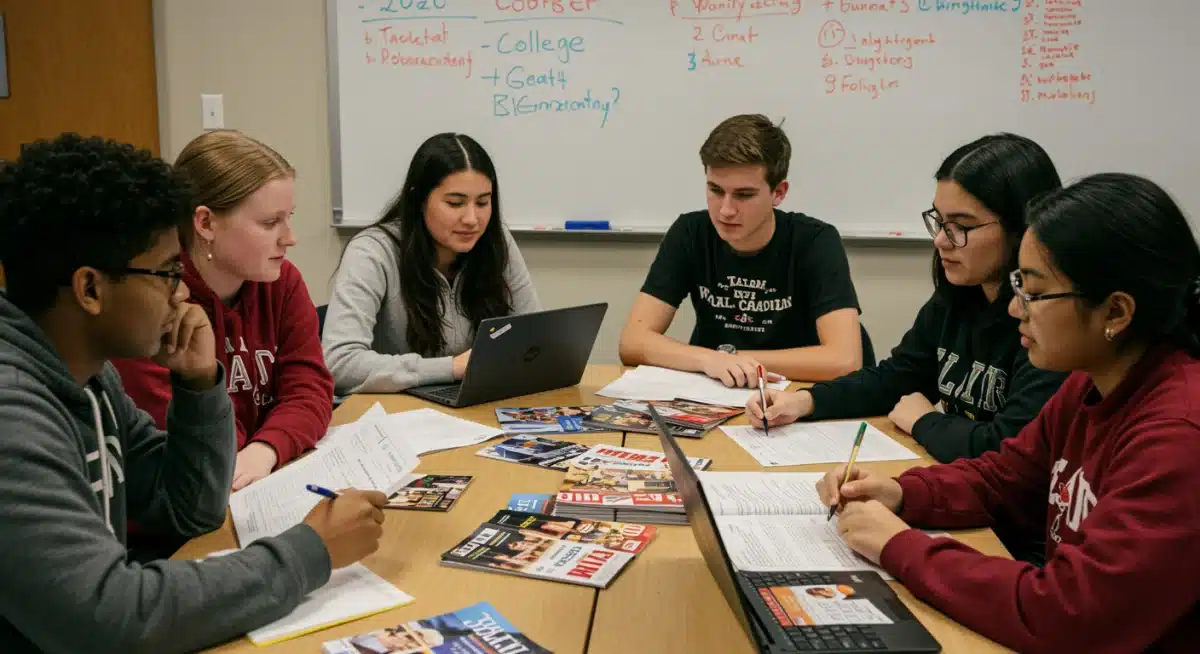
The 2026 college admissions landscape demands strategic preparation; US high schoolers must embrace unique applications, early planning, and authentic engagement to distinguish themselves effectively amidst growing competition.
As US high schoolers look towards the future, understanding the 2026 college admissions landscape is paramount. The path to higher education continues to evolve, presenting both challenges and unprecedented opportunities. How can prospective students effectively navigate this increasingly competitive environment and truly make their applications shine?
Understanding the Evolving Admissions Environment
The college admissions process for 2026 is shaping up to be more dynamic and holistic than ever before. Factors such as test-optional policies, increased emphasis on diversity, equity, and inclusion, and the lasting impacts of technological advancements are fundamentally reshaping how universities evaluate candidates. Students need to be aware of these shifts to tailor their approach successfully.
Gone are the days when a stellar GPA and high test scores alone guaranteed admission to top-tier institutions. While academic excellence remains crucial, colleges are increasingly seeking individuals who demonstrate unique perspectives, resilience, and a clear potential to contribute positively to their campus communities. This broader evaluation means every aspect of a student’s profile carries significant weight.
The Impact of Test-Optional Policies
Many institutions have maintained or adopted test-optional policies, which means submitting SAT or ACT scores is no longer universally required. This shift places greater importance on other application components.
- Essays become more critical in conveying personality and intellectual curiosity.
- Extracurricular activities must demonstrate genuine passion and impact.
- Letters of recommendation offer deeper insights into a student’s character and abilities.
This evolving landscape encourages students to present a well-rounded and authentic portrayal of themselves, moving beyond mere numbers to highlight their individual strengths and experiences. Understanding these nuances is the first step toward crafting a standout application.
Strategy 1: Crafting a Unique and Authentic Narrative
In a sea of highly qualified applicants, authenticity is your greatest asset. Colleges are not just looking for students who fit a mold; they are searching for individuals who bring diverse experiences, perspectives, and passions to their campuses. Your application should tell a compelling story that is uniquely yours, showcasing who you are beyond grades and scores.
This strategy involves deep self-reflection and a willingness to share your genuine interests and aspirations. Think about what truly motivates you, what challenges you’ve overcome, and how these experiences have shaped your personal growth. This personal narrative should weave through your essays, activity descriptions, and even your choice of recommenders.
Beyond the Transcript: Showcasing Your Passions
Your academic record is important, but colleges want to see what you do when you’re not in the classroom. Engaging in extracurriculars that genuinely excite you, rather than just resume-padding activities, can make a significant difference. Demonstrate depth and commitment in a few areas, rather than superficial involvement in many.
- Start a club related to a niche interest.
- Volunteer for a cause you deeply care about.
- Pursue independent research or creative projects.
These activities provide concrete examples of your initiative, leadership, and intellectual curiosity, offering colleges a glimpse into the kind of student and community member you would be. A cohesive narrative that connects your academic pursuits with your personal passions is incredibly powerful.
Strategy 2: Early Planning and Strategic Course Selection
Procrastination can be the enemy of a successful college application. Starting early, ideally in freshman and sophomore years, allows you to strategically plan your high school career to align with your college aspirations. This includes not only academic planning but also exploring potential majors and career paths that resonate with you.
Strategic course selection means taking challenging classes that demonstrate your intellectual capabilities and curiosity. This doesn’t necessarily mean taking every AP or IB course available, but rather choosing courses that genuinely interest you and align with your potential fields of study. Colleges appreciate seeing a rigorous curriculum that is appropriate for your abilities and interests.
Maximizing Academic Rigor and Exploration
Beyond traditional core subjects, consider elective courses that allow you to delve deeper into specific areas. If you’re interested in engineering, for example, look for advanced physics or computer science courses. If humanities are your passion, explore creative writing or philosophy electives.
- Take advantage of dual enrollment programs for college credit.
- Explore online courses or summer programs in specialized fields.
- Seek out independent study opportunities with teachers.
Early preparation also extends to standardized tests, if you choose to take them. Allowing ample time for preparation and retakes can significantly reduce stress and improve scores. Planning ahead ensures you have the necessary foundations in place, making the application process much smoother.
Strategy 3: Cultivating Strong Relationships and Seeking Mentorship
The college application process is not a solitary journey. Building strong relationships with teachers, counselors, and mentors can provide invaluable guidance, support, and powerful recommendations. These individuals can speak to your character, work ethic, and intellectual contributions in a way that your grades alone cannot.
Engage actively in your classes, participate in discussions, and seek help when needed. Teachers are more likely to write compelling letters of recommendation for students they know well and who have demonstrated genuine effort and intellectual curiosity. Similarly, your school counselor can offer strategic advice on college lists, application timing, and navigating financial aid.
The Power of Meaningful Recommendations
A strong letter of recommendation goes beyond simply listing your achievements. It provides specific anecdotes and insights into your personality, your contributions to the classroom, and your potential for success in a college environment. Choose recommenders who know you well and can highlight your unique strengths.
- Ask teachers from subjects where you excelled or showed significant growth.
- Consider mentors from extracurricular activities or community service.
- Provide recommenders with a resume and a brief statement of your goals.
Seeking mentorship, whether formal or informal, can also open doors to new opportunities and provide invaluable perspectives. Mentors can offer advice on career paths, help you develop new skills, and even connect you with professional networks. These relationships enrich your high school experience and strengthen your application.
Strategy 4: Demonstrating Impact and Leadership
Colleges are increasingly interested in students who can demonstrate tangible impact within their communities, whether that’s at school, locally, or even on a broader scale. This goes beyond simply participating in activities; it involves taking initiative, leading projects, and making a measurable difference. Leadership doesn’t always mean holding an official title; it can be demonstrated in various forms.
Think about problems you’ve identified and solutions you’ve helped implement. Did you organize a fundraiser, mentor younger students, or lead a team project? These experiences highlight your ability to collaborate, innovate, and take responsibility, qualities highly valued in a college setting and beyond. Quantify your impact whenever possible, using numbers or specific outcomes.
Leading with Purpose and Initiative
Identify areas where you can take on more responsibility or initiate new projects. This could be within existing clubs, through independent endeavors, or by addressing a need within your community. Colleges want to see that you are a proactive individual who will contribute meaningfully to their campus.
- Launch a peer tutoring program.
- Organize a community service event.
- Develop a creative solution to a local problem.
Documenting your involvement and its impact is crucial. When describing these experiences in your application, focus on the skills you developed, the challenges you faced, and the lessons you learned. This approach demonstrates maturity and a thoughtful engagement with your surroundings, making your application truly stand out.
Navigating Financial Aid and Scholarship Opportunities
Understanding the financial aspects of college admissions is as critical as the application itself. For many families, the cost of higher education is a significant concern, and navigating the complex world of financial aid and scholarships can feel daunting. However, with careful planning and proactive research, students can significantly reduce their financial burden.
Begin researching financial aid options early in your junior year. Familiarize yourself with the Free Application for Federal Student Aid (FAFSA) and the CSS Profile, if required by your prospective colleges. These forms are essential for determining your eligibility for federal and institutional aid, including grants, scholarships, and low-interest loans. Missing deadlines can mean missing out on crucial funding.
Exploring Diverse Scholarship Avenues
Scholarships come in various forms, from merit-based awards to those based on financial need, specific talents, or unique backgrounds. Don’t limit your search to just the most well-known scholarships. Many smaller, local scholarships often have less competition and can add up to a substantial amount.
- Utilize online scholarship search engines.
- Check with your high school counseling office for local opportunities.
- Research scholarships offered by specific colleges and departments.
- Look for scholarships tied to your ethnicity, religion, hobbies, or career aspirations.
Remember that applying for scholarships is an ongoing process. Some have early deadlines, while others open later in the year. Creating a timeline and staying organized will help ensure you don’t miss any opportunities. Proactive engagement with financial aid offices at your target colleges can also provide valuable insights and support.
Preparing for Interviews and Campus Visits
While not universally required, college interviews and campus visits offer invaluable opportunities to demonstrate your interest and learn more about a prospective institution. These interactions can significantly enhance your application by allowing you to showcase your personality, communication skills, and genuine enthusiasm beyond what a written application can convey.
For interviews, preparation is key. Research the college thoroughly, understand its programs, and be ready to articulate why you believe it’s a good fit for you. Practice answering common interview questions, but also prepare insightful questions to ask the interviewer. This demonstrates your engagement and intellectual curiosity. Dress appropriately and maintain good eye contact.
Making the Most of Campus Experiences
Campus visits, whether in-person or virtual, provide a firsthand look at the academic and social environment of a college. They help you gauge if a particular institution aligns with your preferences and learning style. Take notes, observe student life, and try to speak with current students or faculty members.
- Attend information sessions and guided tours.
- Sit in on a class related to your interests.
- Explore dining halls, dorms, and recreational facilities.
- Connect with admissions representatives during your visit.
If an in-person visit isn’t feasible, leverage virtual tours, online information sessions, and student panels. Many colleges offer extensive online resources that can provide a comprehensive view of their campus. These engagements demonstrate your ‘demonstrated interest,’ a factor many selective colleges consider in their admissions decisions.
| Key Strategy | Brief Description |
|---|---|
| Unique Narrative | Craft a compelling, authentic story through essays and activities that highlights individual passions and experiences. |
| Early Planning | Strategically select challenging courses and explore interests from freshman year, allowing ample time for preparation. |
| Strong Relationships | Cultivate meaningful connections with teachers, counselors, and mentors for powerful recommendations and guidance. |
| Demonstrate Impact | Take initiative and lead projects to show measurable contributions to your school or local community. |
Frequently Asked Questions About 2026 College Admissions
Standardized test scores remain important but are less universally required due to test-optional policies. They can strengthen an application, especially if other components are weaker, but holistic review means essays and extracurriculars often weigh more heavily.
Colleges prefer depth over breadth. Focusing on a few extracurriculars that genuinely interest you, where you can demonstrate sustained commitment and leadership, is more impactful than superficial involvement in many activities. Show genuine passion and impact.
Ideally, preparation should begin in freshman and sophomore years. This allows for strategic course selection, exploration of interests, and building strong relationships with teachers and mentors, making the actual application process much smoother and more effective.
Your essays should tell a unique, authentic story that reveals your personality, intellectual curiosity, and personal growth. Avoid clichés, be specific with anecdotes, and let your genuine voice shine through. Proofread meticulously for clarity and impact.
Letters of recommendation are crucial for providing an external perspective on your character, work ethic, and contributions. Strong recommendations from teachers and mentors who know you well can significantly bolster your application by offering specific examples of your strengths.
Conclusion
Navigating the 2026 college admissions landscape requires more than just good grades; it demands a strategic, thoughtful, and authentic approach. By understanding the evolving priorities of universities, crafting a unique narrative, planning early, cultivating strong relationships, and demonstrating tangible impact, US high schoolers can significantly enhance their chances of standing out. The journey to higher education is a marathon, not a sprint, and proactive engagement with these four strategies will empower students to confidently pursue their academic aspirations and find the best fit for their future.